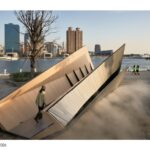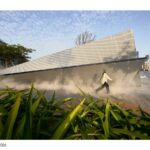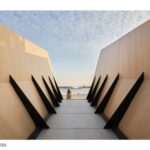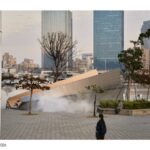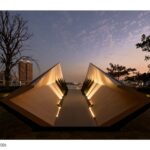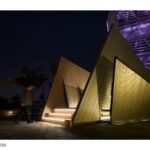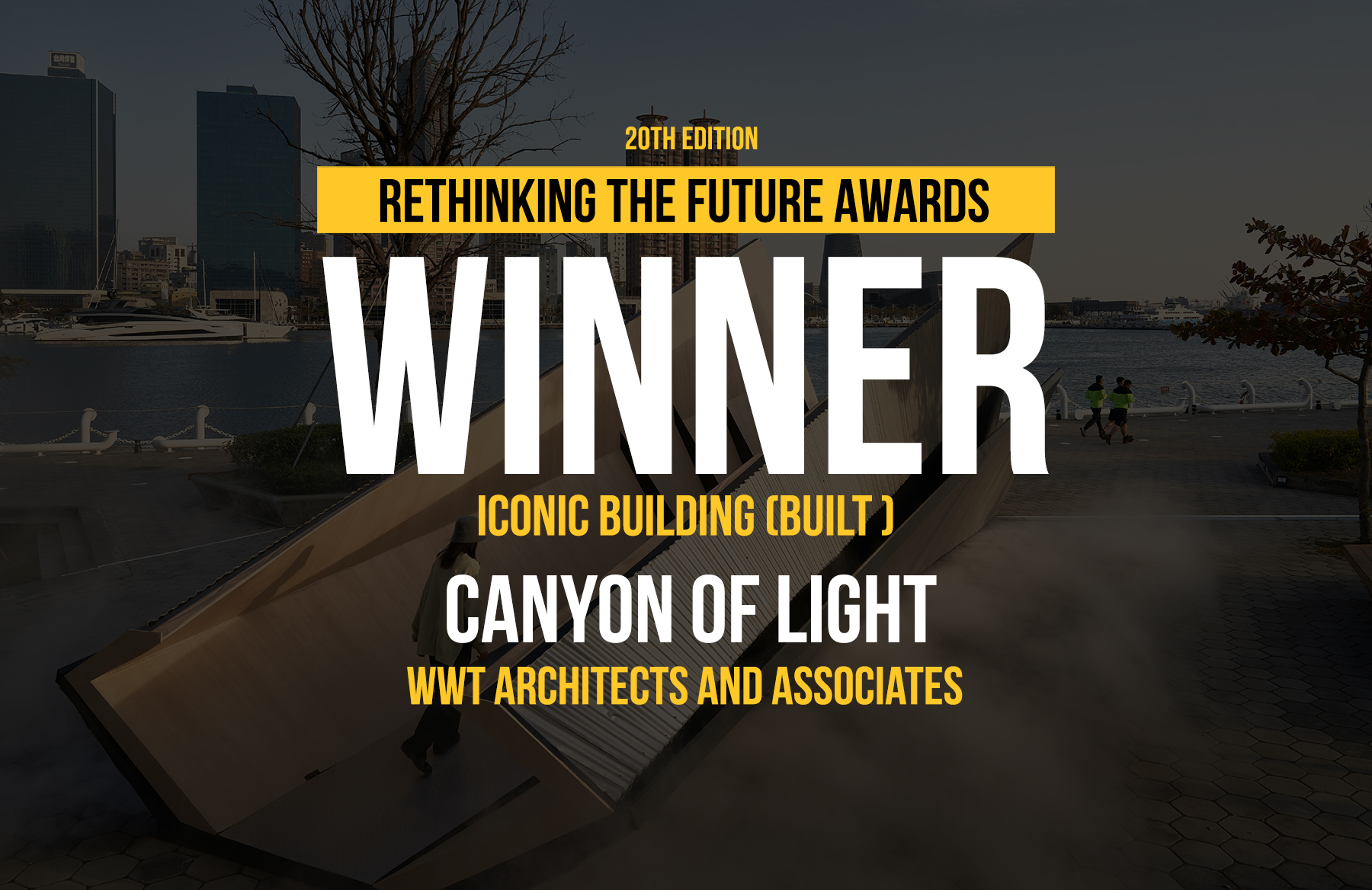
Canyon of Light transforms a familiar industrial artifact — the shipping container — into an experiential landscape of perception. Rather than treating the container as an object, the project unfolds it as a spatial event.
Rethinking The Future Awards 2026
First Award | Iconic Building (Built)
Project Name: Canyon of Light
Category: Iconic Building (Built)
Studio Name: WWT Architect & Associates
Design Team: WU WEITING , LIN MENGZONG
Area:Taiwan
Year:2025
Location:Koahsiung
Consultants:None
Photography Credits: Ciao-Pie
Render Credits: WWT Architect & Associates
Other Credits: WWT Architect & Associates
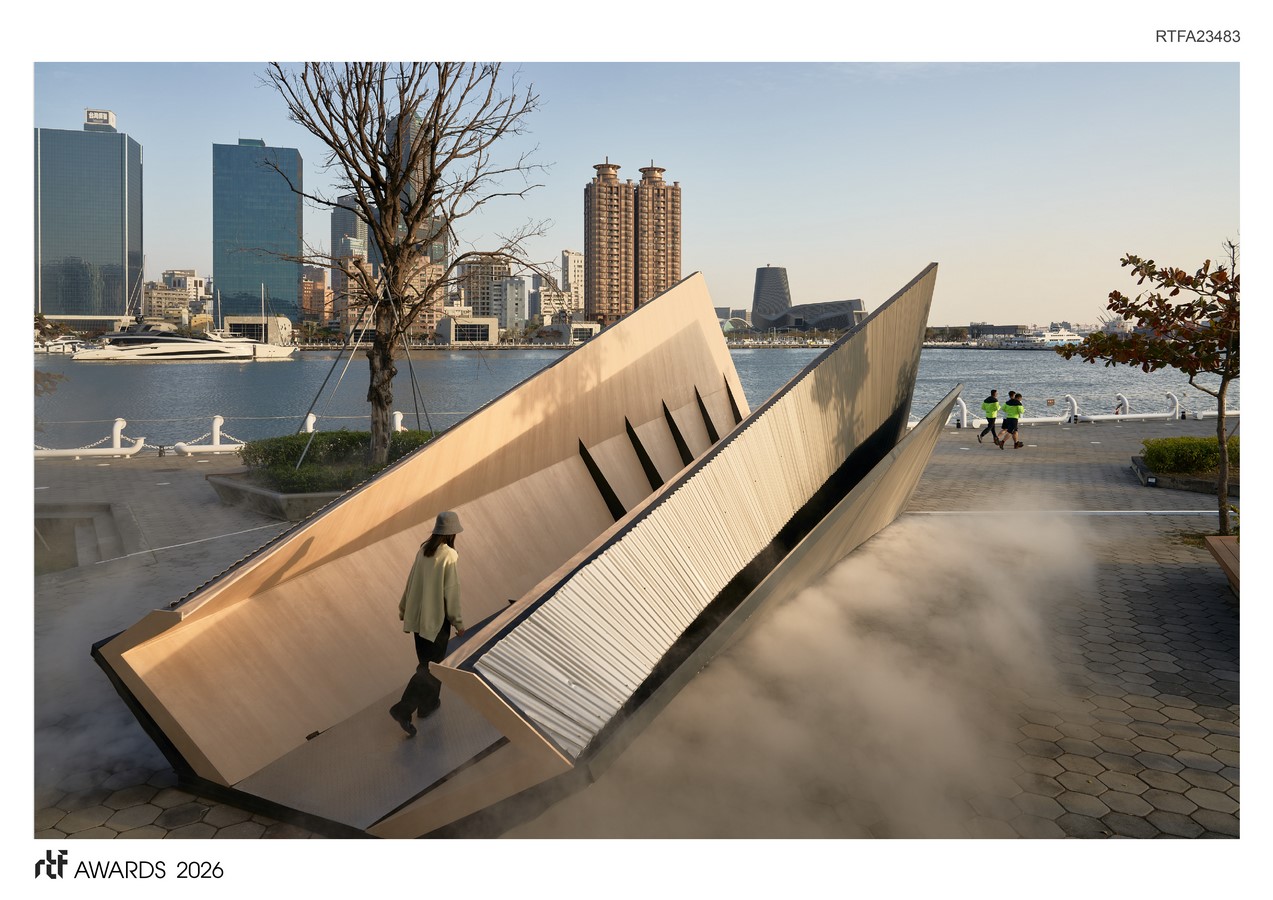
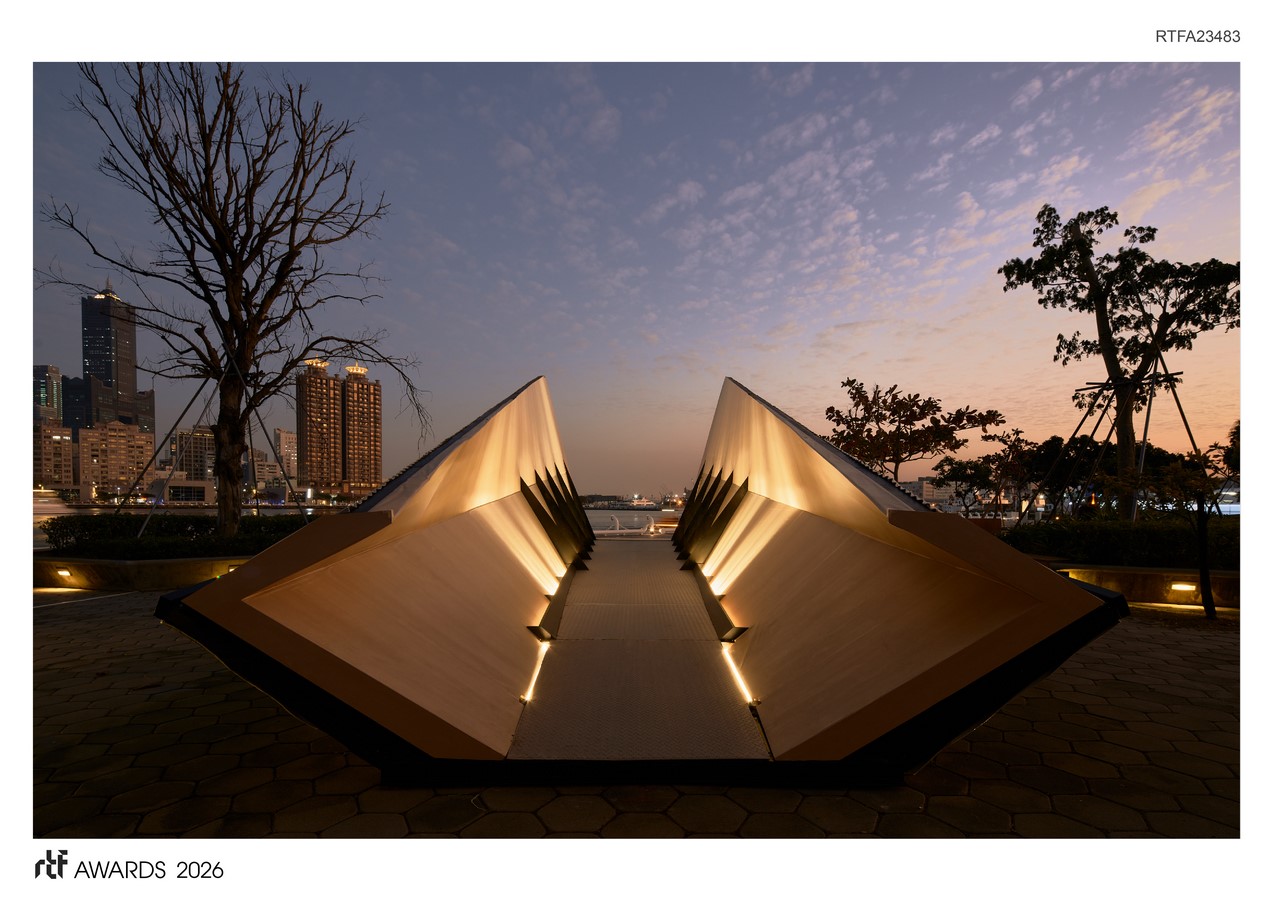
Two steel skins are cut, bent, and lifted upward to form a canyon-like void, creating a passage that is neither building nor sculpture, but a calibrated transition between environments. The installation operates through the choreography of movement: compression, ascent, release.
Visitors enter through a narrow threshold where vision adjusts and sound softens. The ground rises almost imperceptibly, encouraging a slower pace and heightened awareness of the body. As one advances, daylight begins to diffuse across recycled translucent PET panels, dissolving the harshness of the original metal into a luminous interior atmosphere. At key moments, fine mist drifts through the space, catching concealed linear light. Light becomes volumetric — no longer a surface phenomenon but a medium that can be inhabited.
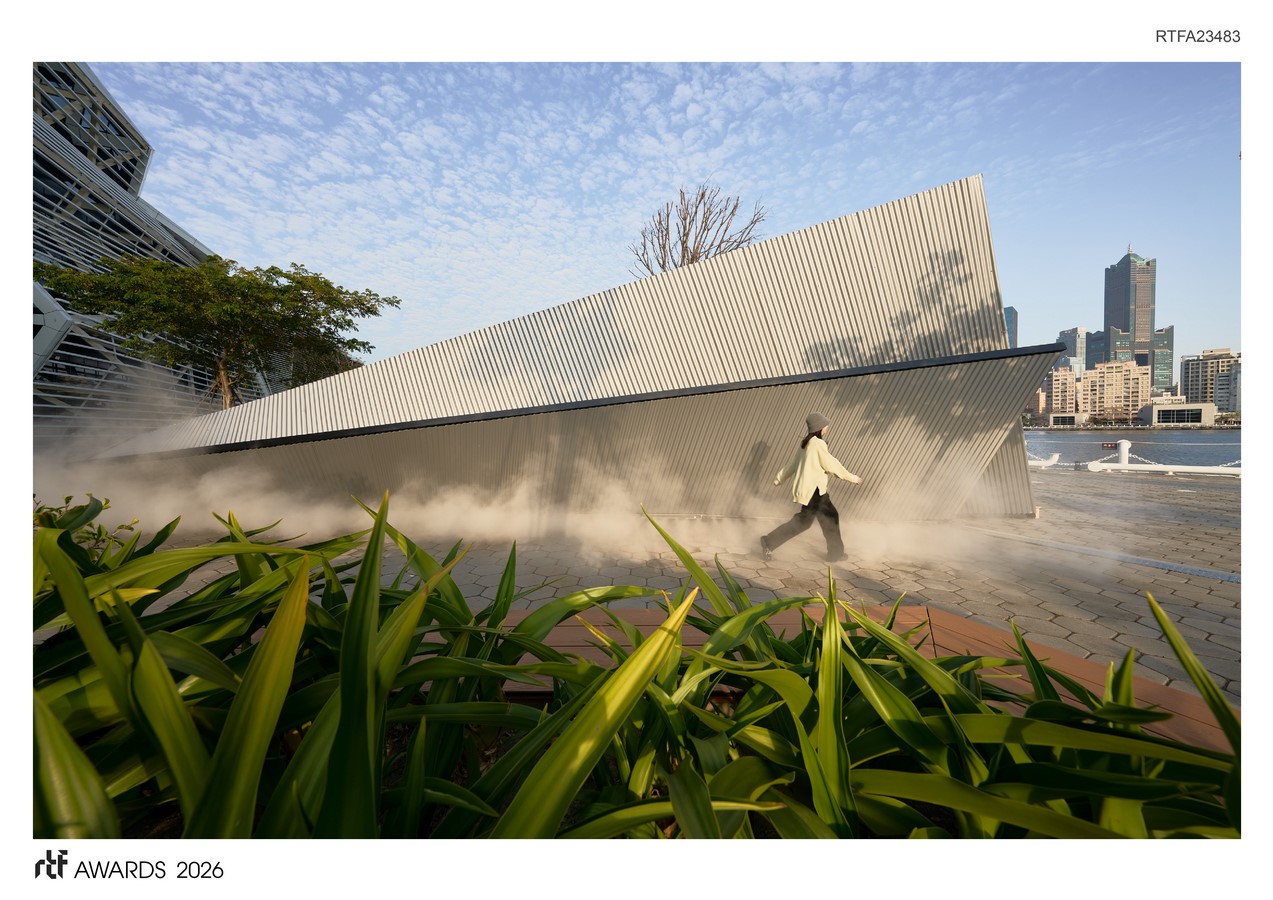
The project rejects spectacle in favor of sensory attunement. There are no explicit instructions, no singular viewpoint, and no fixed narrative. Instead, perception itself becomes the content: shifting brightness, changing humidity, the sound of wind moving through steel cavities, and the distant reflection of water and sky revealed at the exit. The experience lasts less than a minute, yet alters the awareness of time — an architectural pause embedded within an urban waterfront.
Situated within a port environment historically defined by logistics and industry, the work repositions material memory as cultural memory. The container, once a symbol of global trade and mechanical efficiency, is re-authored as a vessel of atmosphere. By reusing the steel shell and incorporating recycled PET panels, the installation avoids decorative sustainability and instead performs material transformation directly. Industrial residue becomes environmental interface.
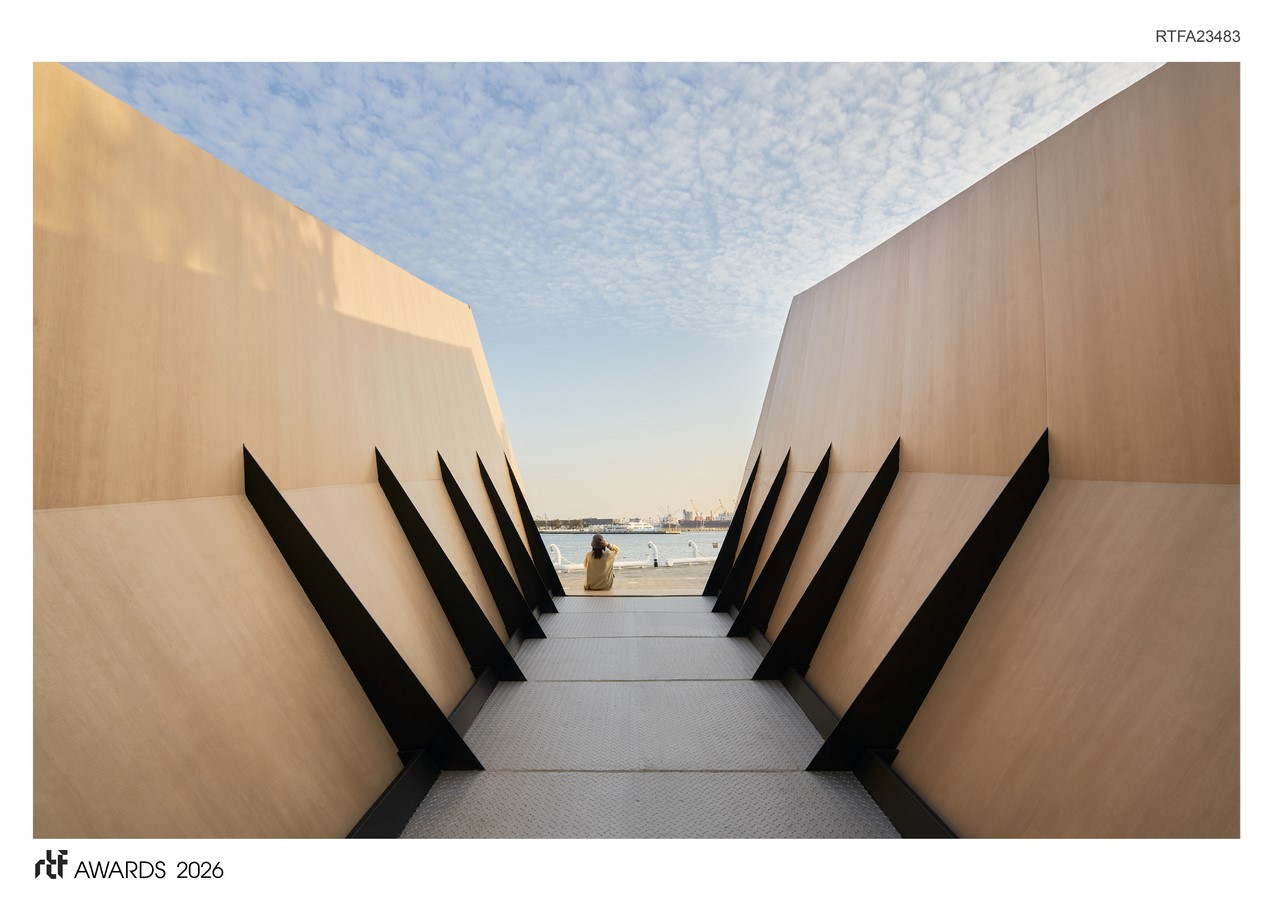
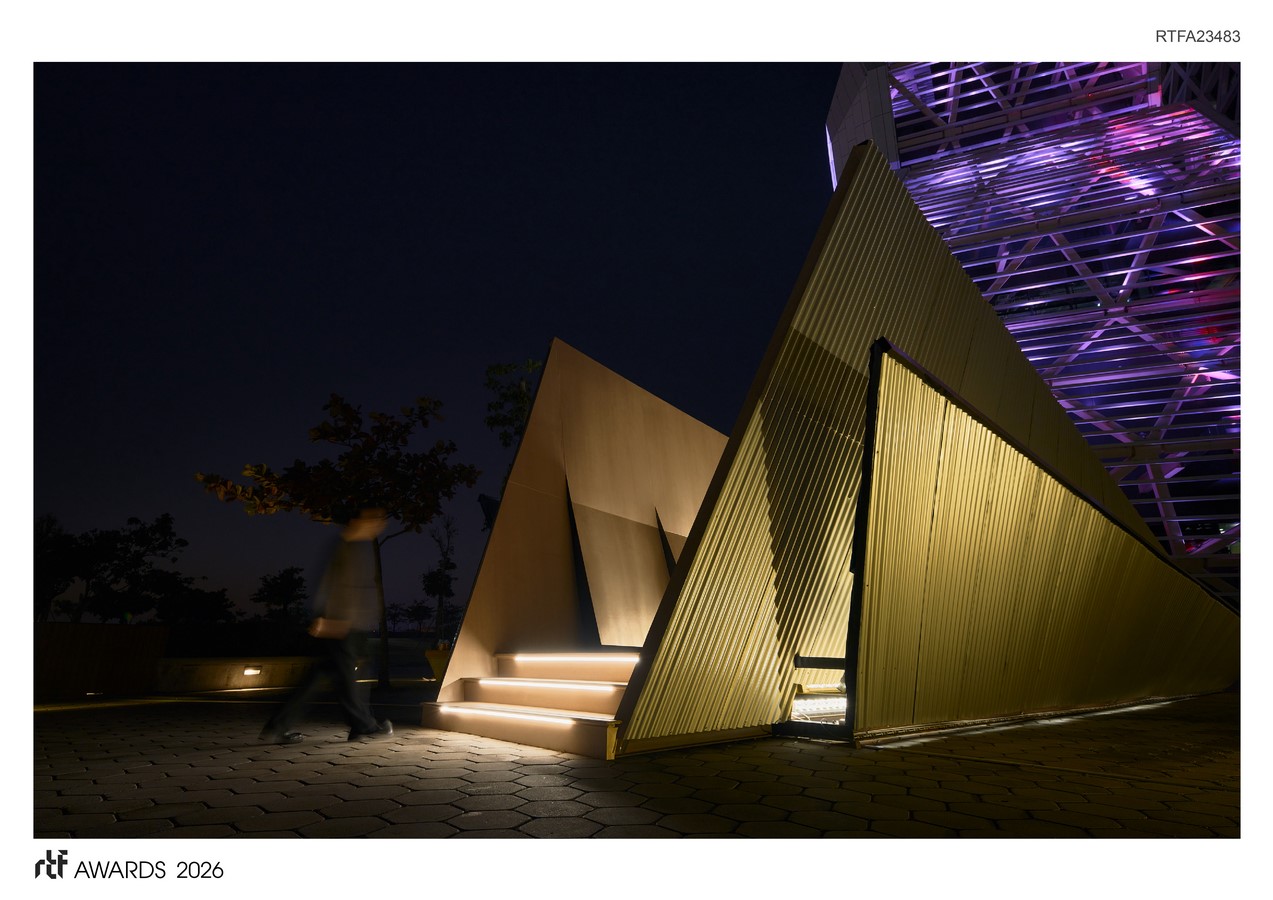
Formally, the structure reads as a frozen wave carved by coastal wind — a gesture belonging equally to machinery and nature. During the day, the canyon captures sky luminance and modulates glare; at dusk, interior light softly radiates outward; at night, mist reveals floating beams that briefly materialize the invisible conditions of air. The installation therefore changes identity across time, weather, and occupancy, allowing the public to encounter it repeatedly as a different place.
Canyon of Light contributes to public art by shifting emphasis from object-viewing to embodied experience. It does not ask visitors to observe, but to pass through; not to interpret, but to sense. The work occupies the threshold between infrastructure and landscape, permanence and ephemerality, silence and movement. Through minimal means — steel, recycled polymer, light, and atmosphere — it constructs a shared moment of awareness within the everyday city.
In doing so, the project demonstrates how public art can operate as environmental perception rather than visual icon, offering a subtle yet profound civic experience: a short journey where architecture becomes weather, and passage becomes memory.