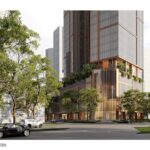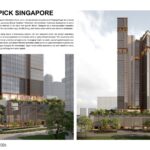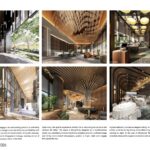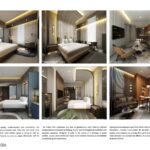
Mövenpick Singapore is a landmark mixed-use hotel development located within Singapore’s Downtown Core, in the evolving Tanjong Pagar district and within close proximity to major Mass Rapid Transit (MRT) lines and the future Greater Southern Waterfront. Conceived as a next-generation hospitality anchor, the project reinterprets high-density urban development through the lenses of sustainability, inclusivity and contextual identity.
Rethinking The Future Awards 2026
Second Award | Hospitality (Concept)
Project Name: Mövenpick Singapore
Category: Hospitality (Concept)
Studio Name: DP Architects
Design Team:
- Architectural Design Team – Francis Lee Seng Wee, Ti Lian Seng, Tong Bin Sin, Jacqueline Pong, Dadi Surya, Pinson Lim, Karen Yeo, Iman Ashar, Kiki Raditya, Chen Yili, Tan Chong Chen, Cheang Pooi San, Tara Sreenivasan, Hong Siew Foong.
- Interior Design Team – Jeremy Tan, Loh Hai Yew, Jessica Chow, Reynaldo Castillo, Mahisa Narendra
- DP Engineers (C&S) – Tan Yew Chai, Romy Tjuar, Toby Kaung, Beh Renxin
- DP Engineers (M&E) – Goh Yong Ping, Renee Cheong, Eric Kow, Alycia Tay
- DP Façade – Mathieu Meur, Mac Tan, Chaw Su Ski Mi
- DP Lighting – Christine Chan, Lester Cruz
- DP Green (Landscape Design) – Yeong Weng Fai, Ong Siew Leng
- DP Sustainable Design – Yong Siew Onn, Jess Lee
Area: 28,800 sqm (Gross Floor Area)
Year: 2026
Location: Singapore
Other Consultants:
- We Create Studio (Design for Safety)
- Vertix Asia Pacific Pte Ltd (Traffic)
- ArborOne (Arborist)
- SHEVS IFT Consultants Pte Ltd (Fire Safety)
Photography Credits:
Render Credits: DP Architects
Other Credits:
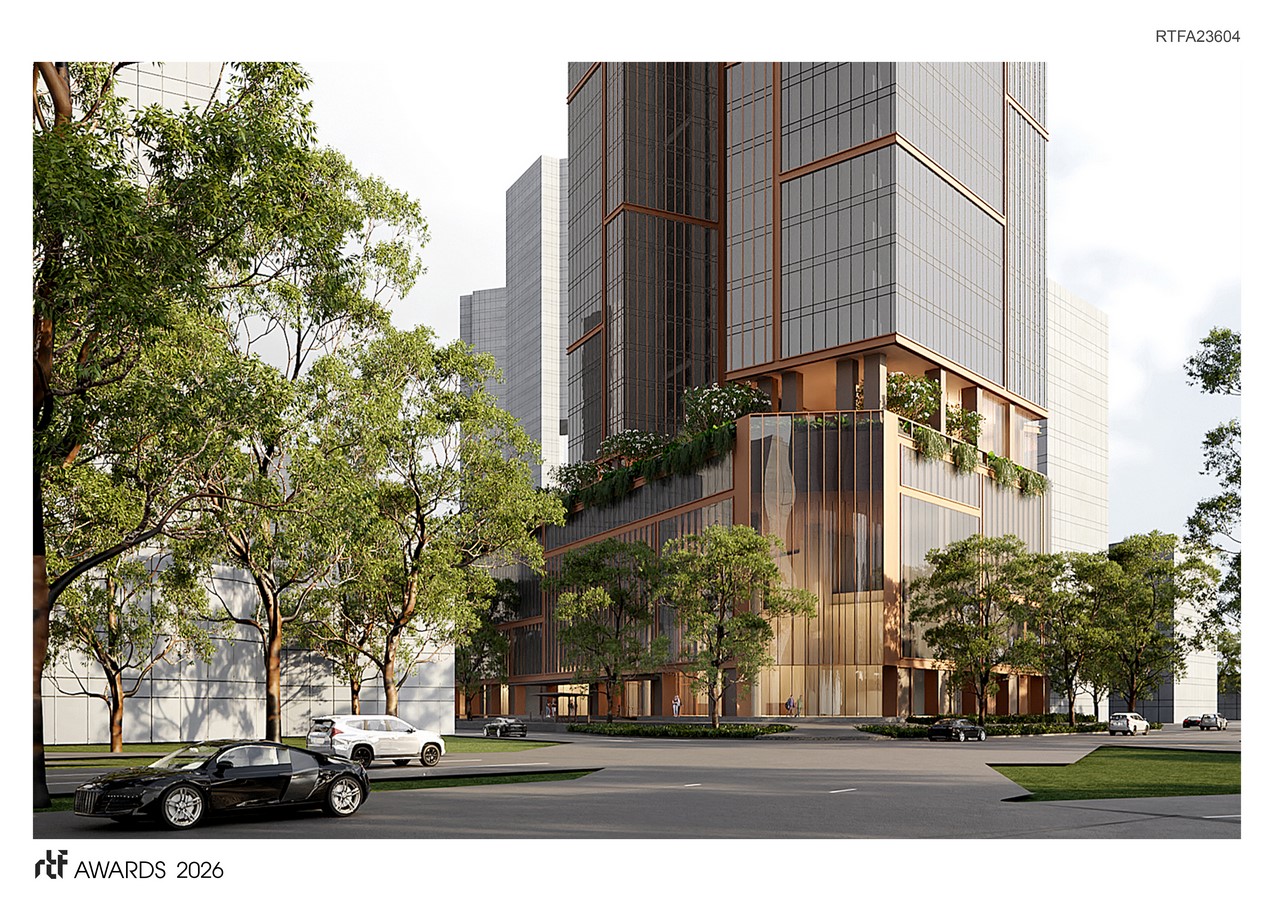
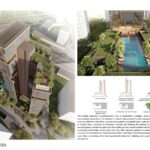
The development comprises a 31-storey tower rising from a three-storey podium with two basement levels, integrating hotel, commercial and serviced apartment functions within a compact footprint. Transforming the constraints of vertical density into an architectural opportunity, the design leverages height to create layered spatial experiences, elevated landscapes and interconnected public realms that extend the city upwards.
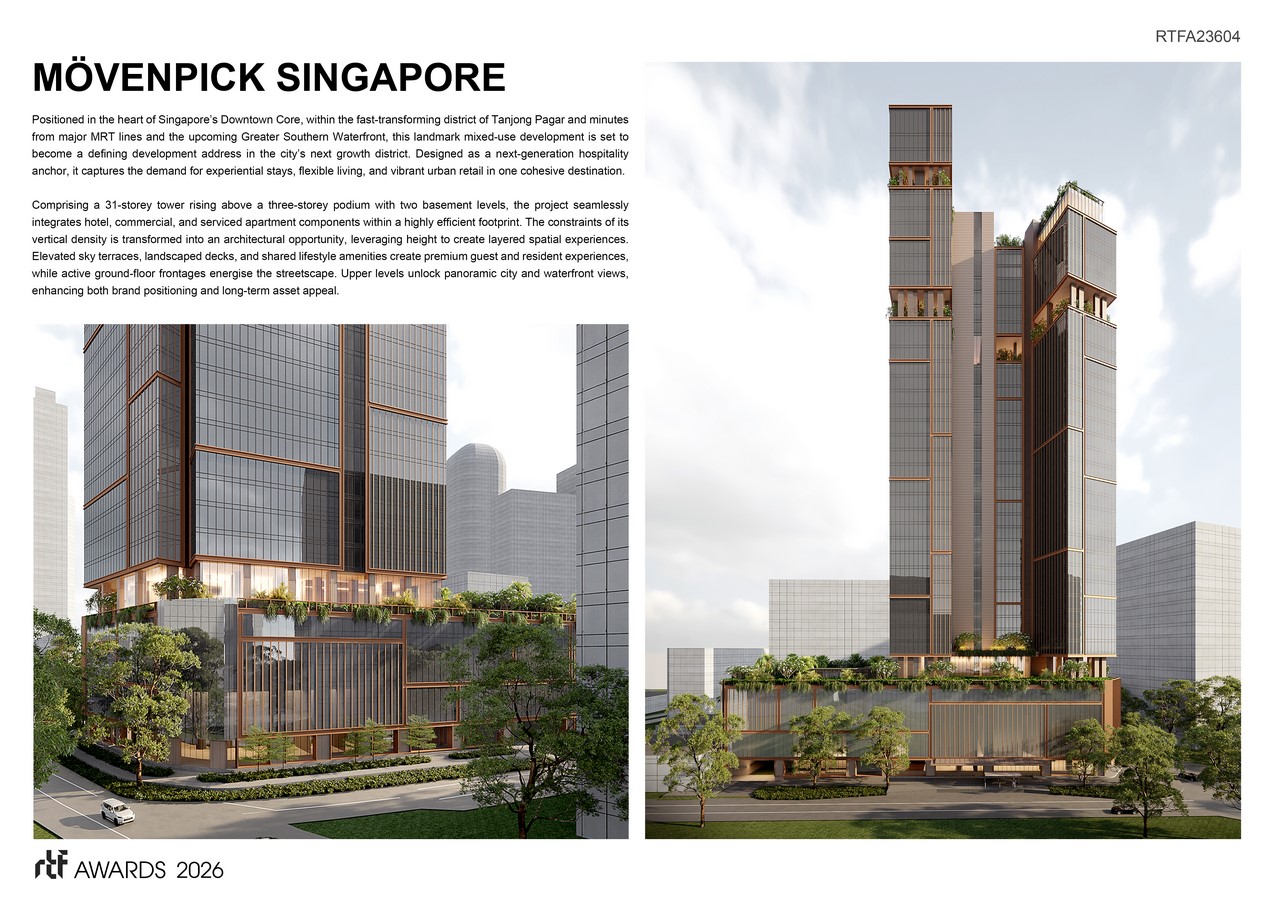
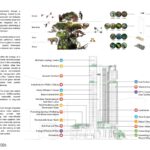
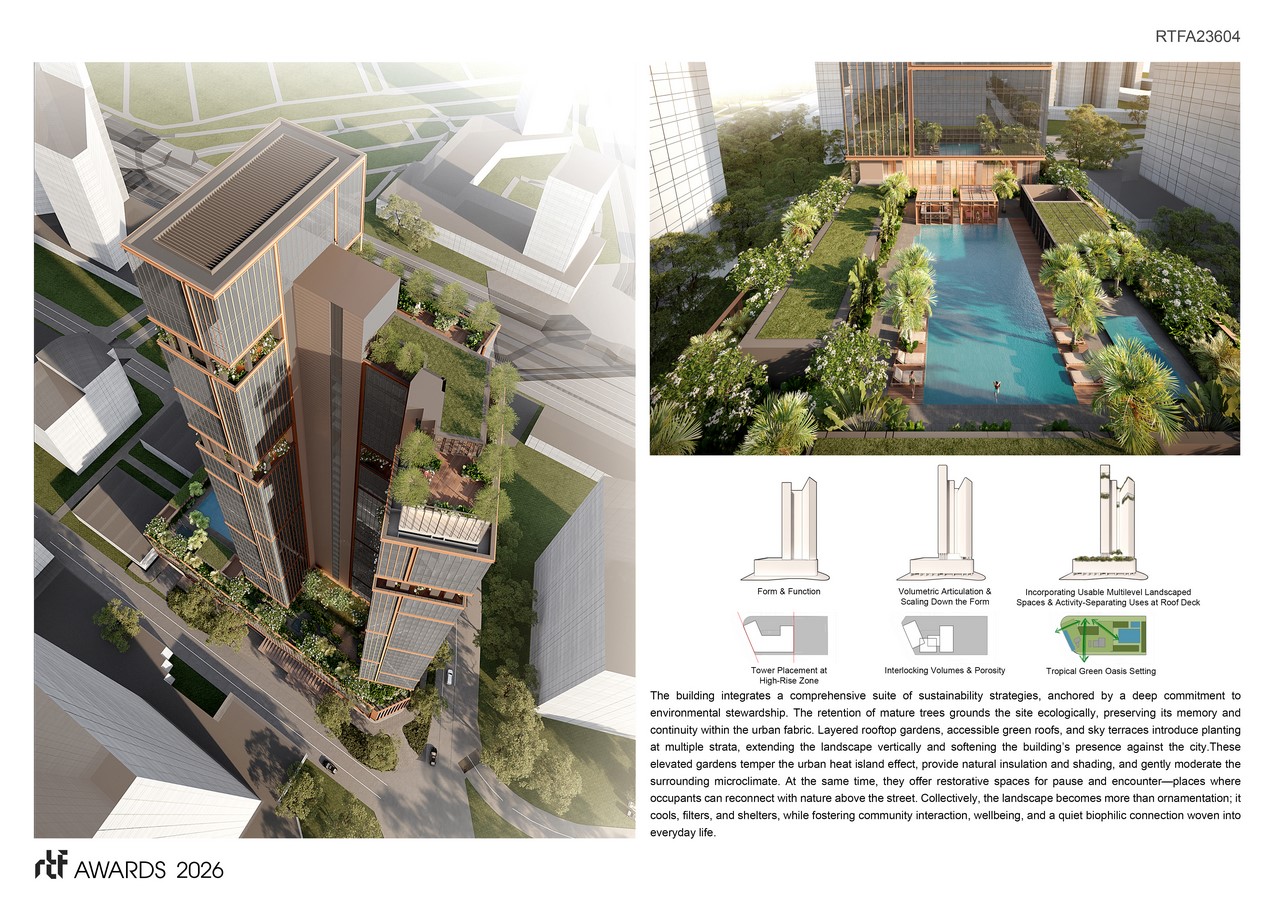
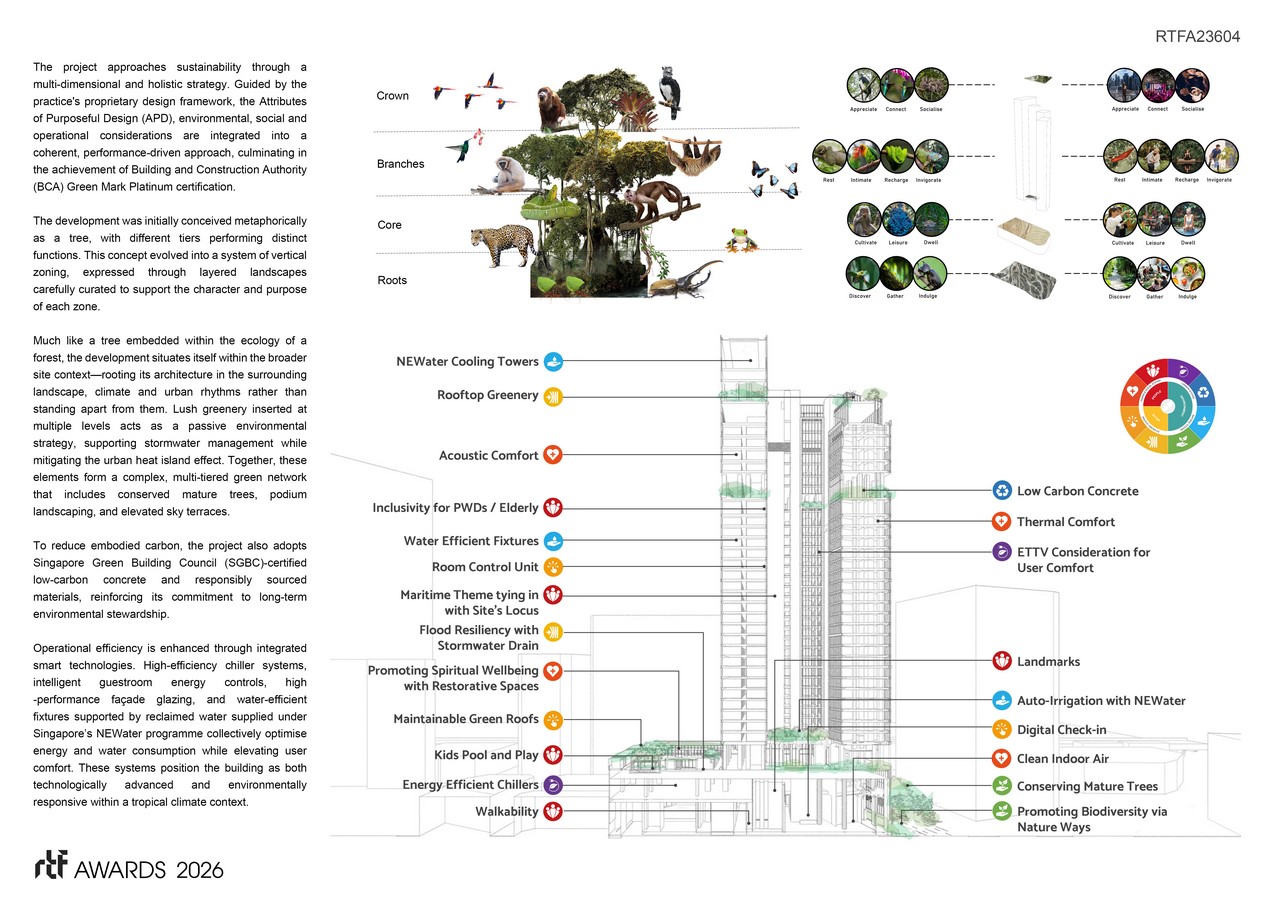
Guided by a commitment towards environmental stewardship, sustainability is embedded as a generative design driver. Guided by the practice’s proprietary design framework Attributes of Purposeful Design (APD), the project aligns environmental, social and operational strategies into a coherent performance-based approach, thus culminating in achieving Building and Construction Authority (BCA) Green Mark Platinum certification. A multi-tiered green network—including conserved mature trees, podium landscaping and sky terraces—enhances biodiversity while mitigating the urban heat island effect. The project also adopts Singapore Green Building Council (SGBC)-certified low-carbon concrete and responsibly sourced materials to reduce embodied carbon, reinforcing its commitment to long-term environmental stewardship.
Operational efficiency is enhanced through integrated smart technologies. High-efficiency chiller systems, intelligent guestroom energy controls, high-performance façade glazing and water-efficient fixtures supported by reclaimed water supplied under Singapore’s NEWater programme collectively optimise energy and water consumption while elevating user comfort. These systems position the building as both technologically advanced and environmentally responsive within a tropical climate context.
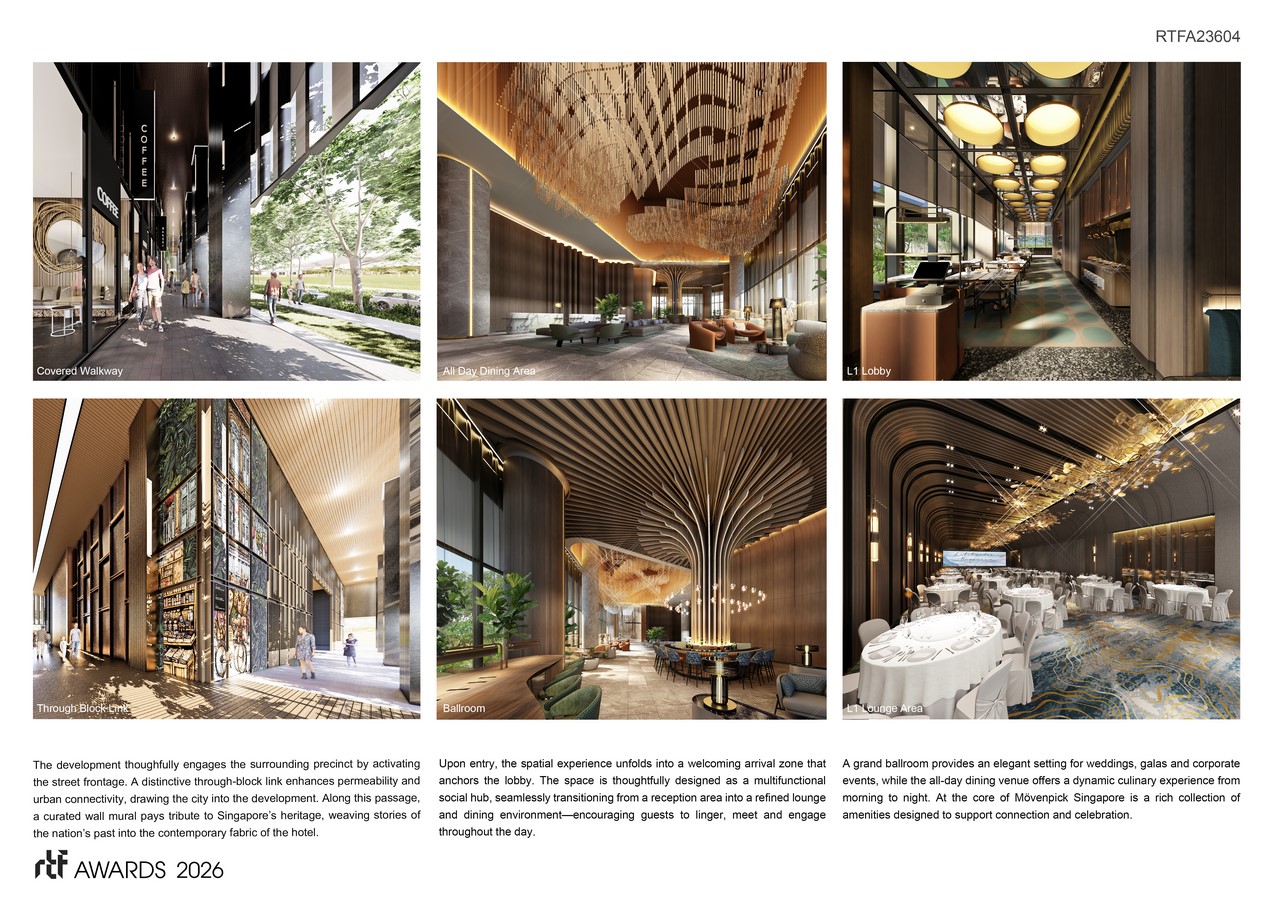
Architecturally, the project draws inspiration from Tanjong Pagar’s maritime heritage. Spatial sequencing, material articulation, curated artworks and landscape murals reinterpret the district’s historic port identity into a contemporary hospitality narrative. This layered storytelling enriches the guest experience while anchoring the development within its cultural setting.
Inclusive design principles ensure accessibility and comfort for diverse user groups, while landscaped decks, wellness facilities and family-oriented amenities introduce restorative environments within a dense urban fabric. By balancing performance, place-making and human-centred design, Mövenpick Singapore proposes a forward-looking model for hospitality architecture in rapidly densifying cities.
The project ultimately demonstrates how luxury hospitality can evolve beyond aesthetics and amenity to become a catalyst for regenerative urban design—where environmental responsibility, technological intelligence and cultural continuity converge to shape a better and more resilient future.