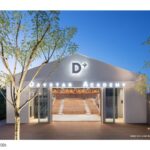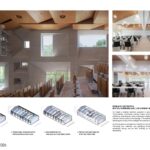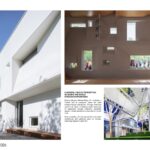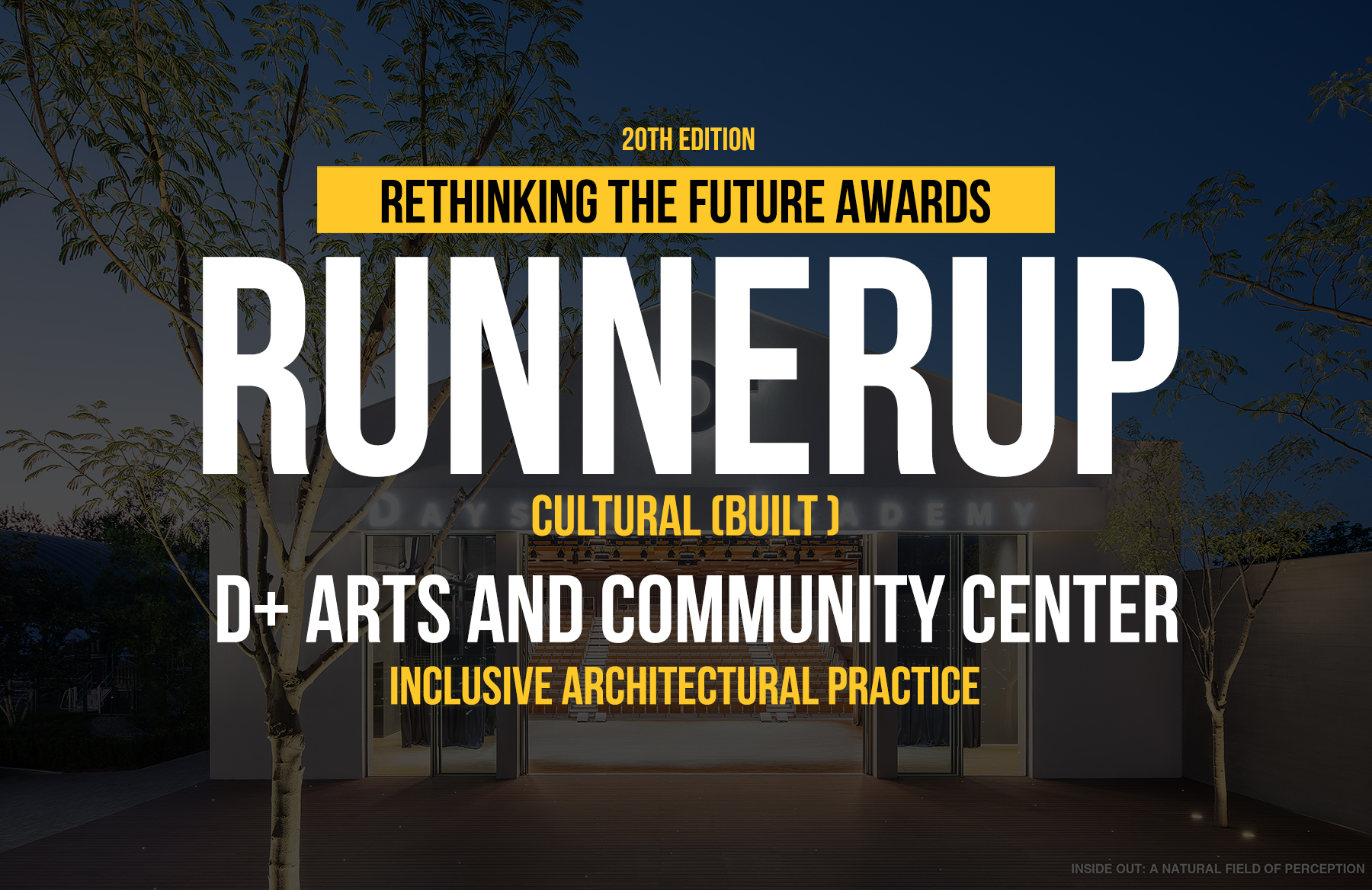
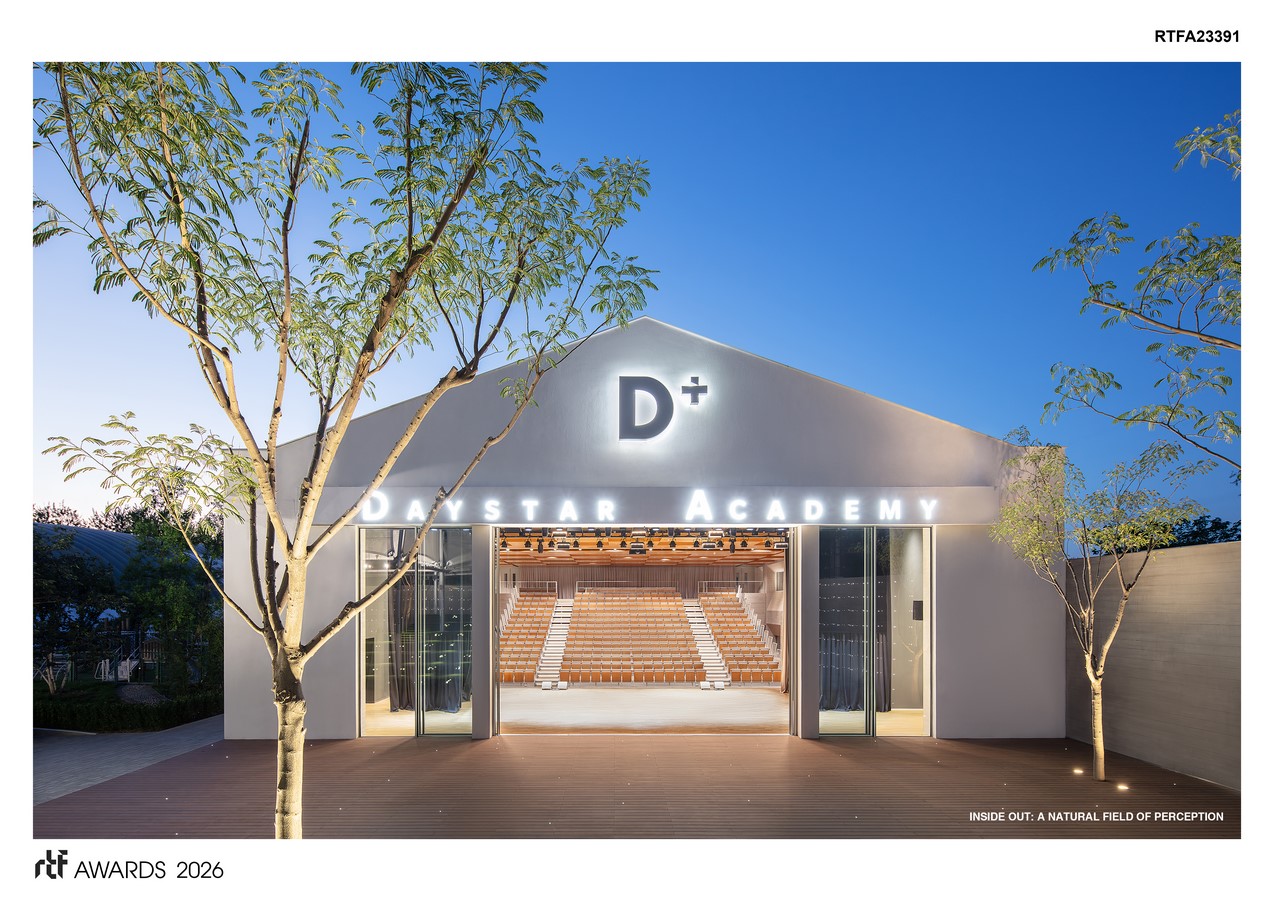
Daystar Academy, the first K–12 school in China to integrate social innovation into its framework, initiated the transformation of an existing gymnasium in 2023 to re-energize its campus culture. The design grounds the performing arts in lived experience, shifting the center from a world of make-believe to a natural field of perception, from occasional spectacle to daily encounter, and from private imagination to shared memory.
Rethinking The Future Awards 2026
Second Award | Cultural (Built)
Project Name: D+ Arts and Community Center
Category: Cultural (Built)
Studio Name: Inclusive Architectural Practice
Design Team: Xiaoyi Ma, Jing Zhu, Pengfei Chen, Jiajia Zhu
Area: 1519 m2
Year: 2024
Location: Beijing China
Consultants: Beijing Qing Da Jian Sheng Building Technology Co. (Acoustic Design), Beijing Band Lighting Design Co., Ltd (Lighting Design), Beijing Jian Yan Yuan Fang Construction Co. (Structural and MEP Design)
Photography Credits: Xia Zhi
Render Credits: Inclusive Architectural Practice
Other Credits:
Recontextualization: From Enclosed Theater to Open Landscape
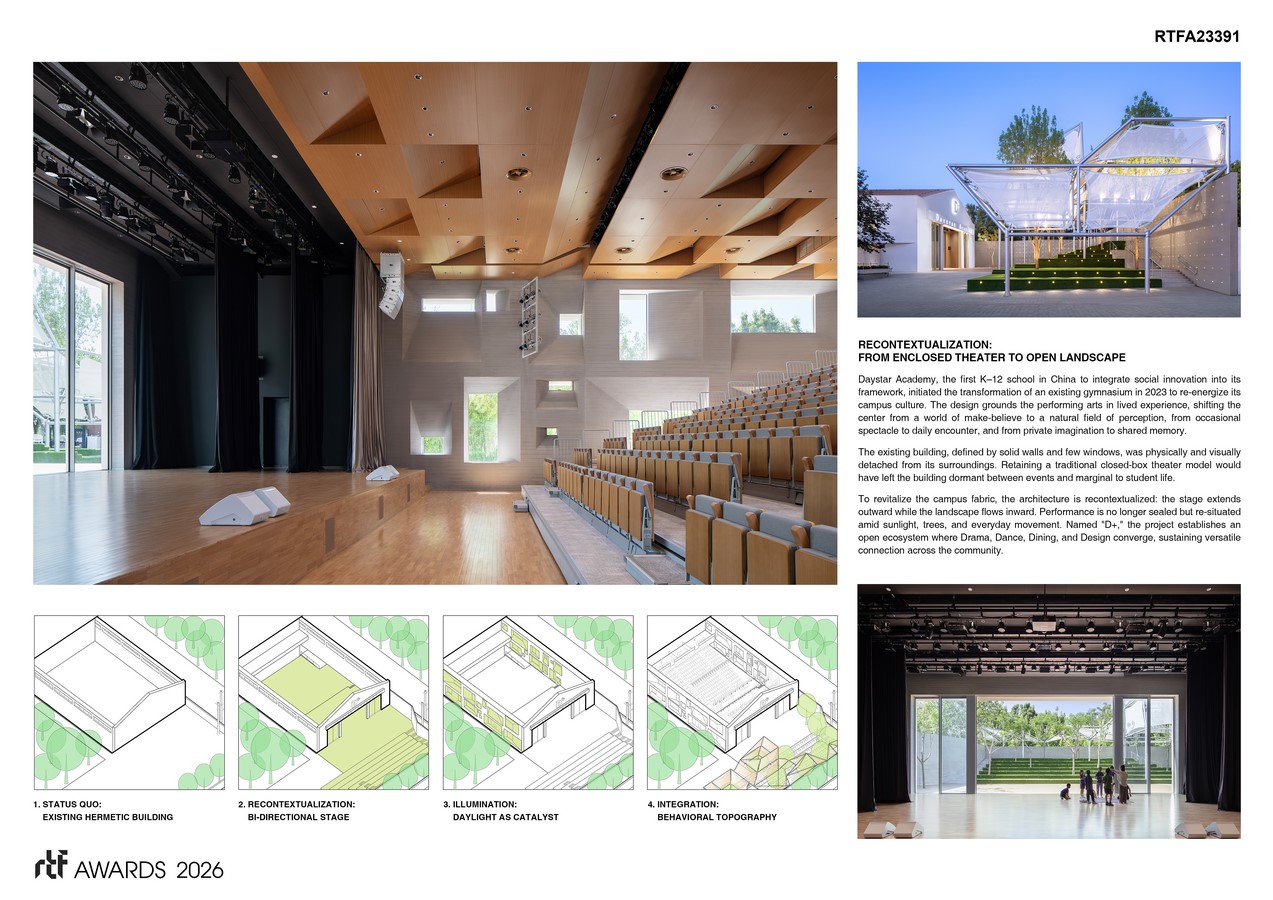
The existing building, defined by solid walls and few windows, was physically and visually detached from its surroundings. Retaining a traditional closed-box theater model would have left the building dormant between events and marginal to student life.
To revitalize the campus fabric, the architecture is recontextualized: the stage extends outward while the landscape flows inward. Performance is no longer sealed but re-situated amid sunlight, trees, and everyday movement. Named “D+,” the project establishes an open ecosystem where Drama, Dance, Dining, and Design converge, sustaining versatile connection across the community.
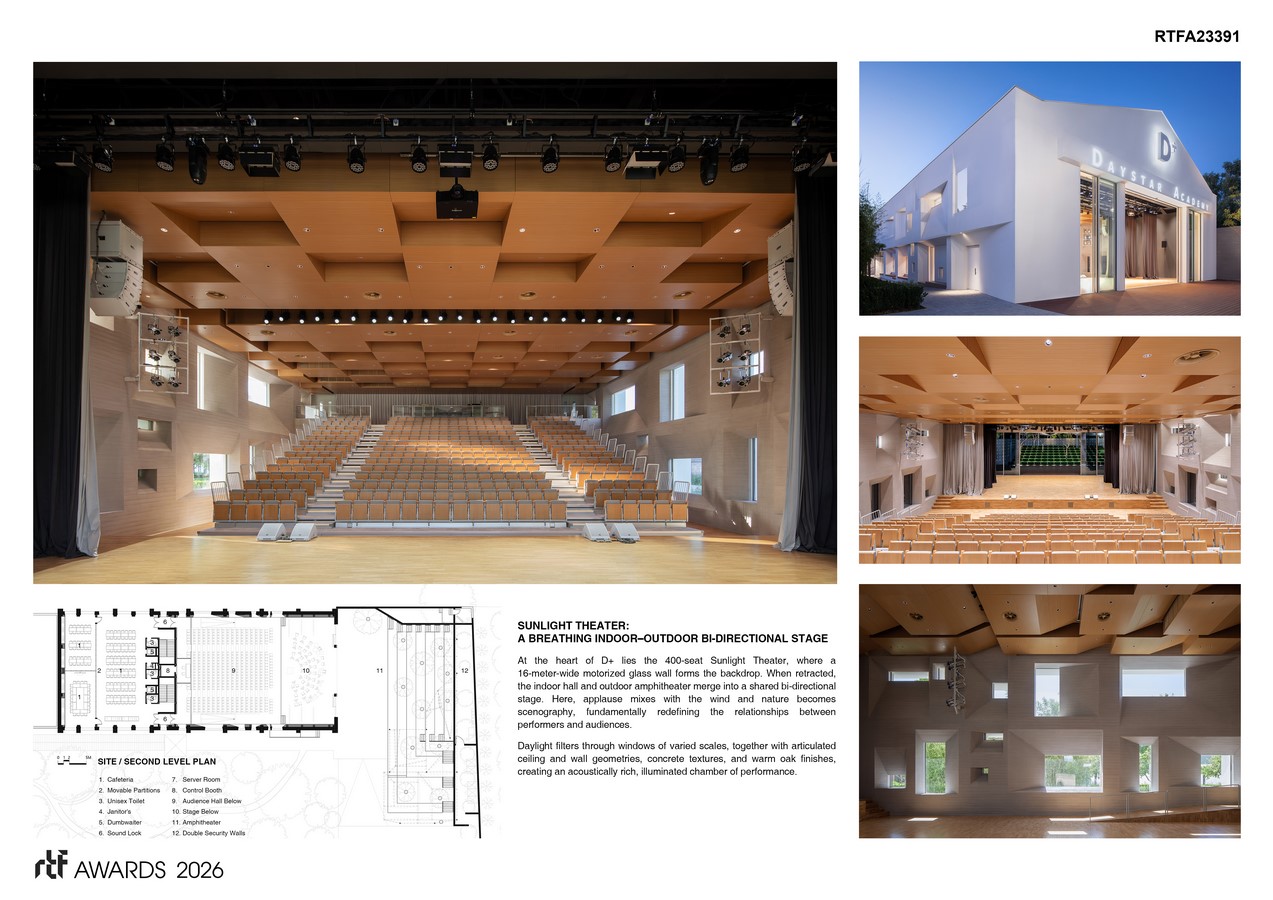
Sunlight Theater: A Breathing Indoor–Outdoor Bi-Directional Stage
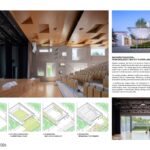
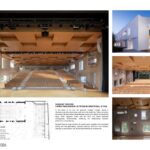
At the heart of D+ lies the 400-seat Sunlight Theater, where a 16-meter-wide motorized glass wall forms the backdrop. When retracted, the indoor hall and outdoor amphitheater merge into a shared bi-directional stage. Here, applause mixes with the wind and nature becomes scenography, fundamentally redefining the relationships between performers and audiences.
Daylight filters through windows of varied scales, together with articulated ceiling and wall geometries, concrete textures, and warm oak finishes, creating an acoustically rich, illuminated chamber of performance.
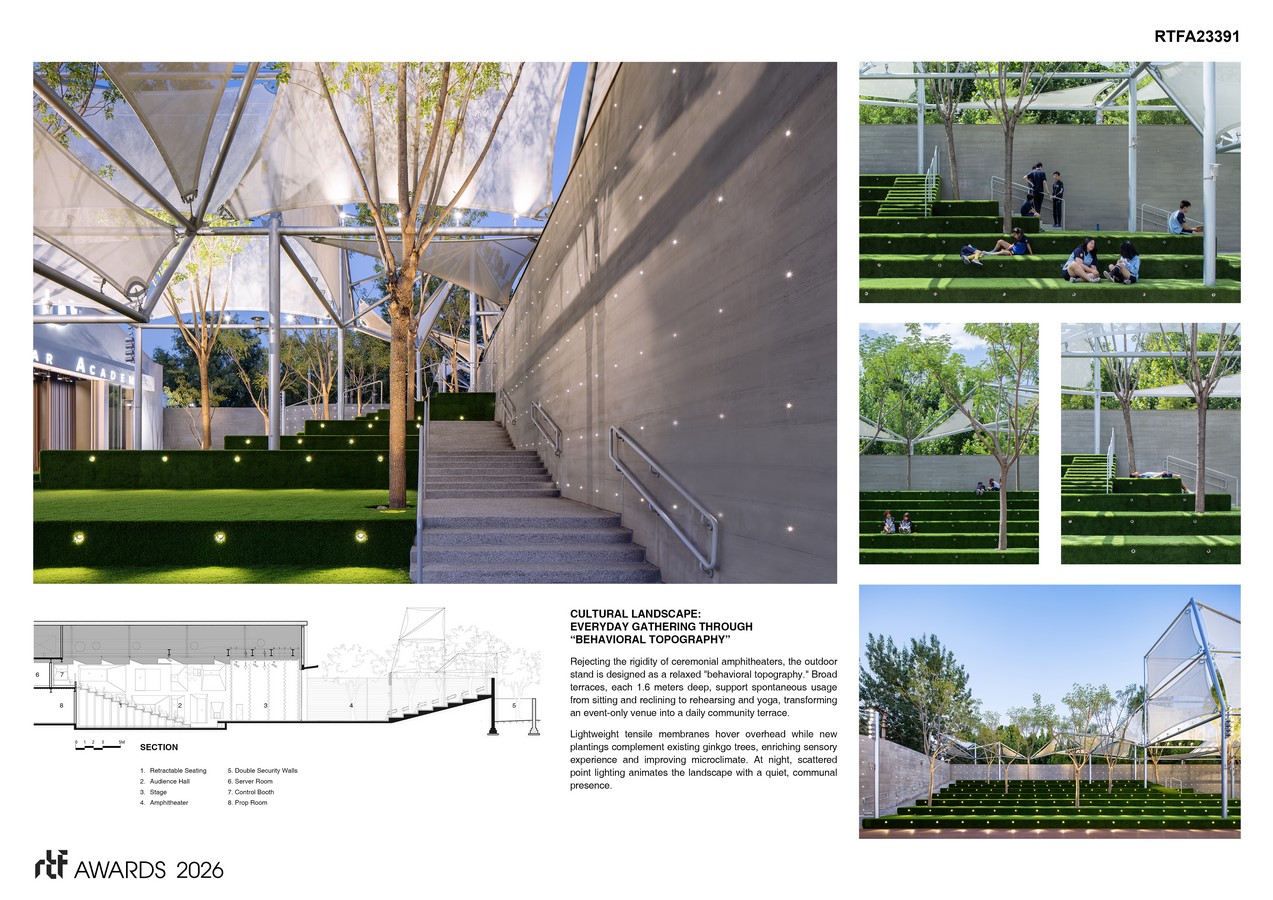
Cultural Landscape: Everyday Gathering through “Behavioral Topography”
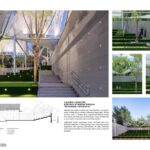
Rejecting the rigidity of ceremonial amphitheaters, the outdoor stand is designed as a relaxed “behavioral topography.” Broad terraces, each 1.6 meters deep, support spontaneous usage from sitting and reclining to rehearsing and yoga, transforming an event-only venue into a daily community terrace.
Lightweight tensile membranes hover overhead while new plantings complement existing ginkgo trees, enriching sensory experience and improving microclimate. At night, scattered point lighting animates the landscape with a quiet, communal presence.
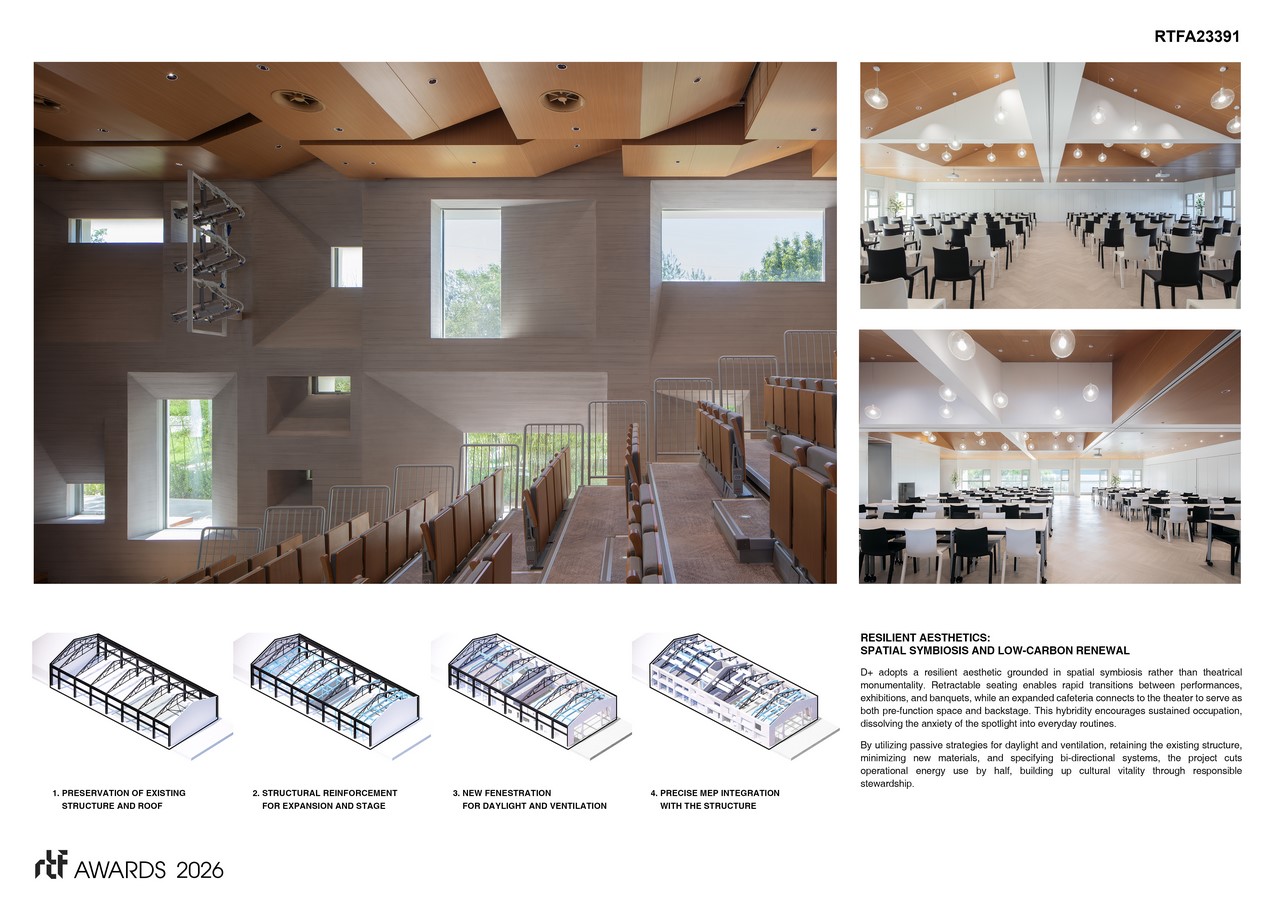
Resilient Aesthetics: Spatial Symbiosis and Low-Carbon Renewal
D+ adopts a resilient aesthetic grounded in spatial symbiosis rather than theatrical monumentality. Retractable seating enables rapid transitions between performances, exhibitions, and banquets, while an expanded cafeteria connects to the theater to serve as both pre-function space and backstage. This hybridity encourages sustained occupation, dissolving the anxiety of the spotlight into everyday routines.
By utilizing passive strategies for daylight and ventilation, retaining the existing structure, minimizing new materials, and specifying bi-directional systems, the project cuts operational energy use by half, building up cultural vitality through responsible stewardship.
A Natural Field of Perception: Re-seeing the World through Participation
Echoing Maurice Merleau-Ponty, D+ embodies a “natural field of perception” where the world emerges through participation. Through continuous contact with nature, it heightens bodily awareness for performers; through immersive, accessible spaces, it invites audiences to encounter art as part of life.
Since completion, D+ has become the most active performance and gathering place on campus, revitalizing Daystar’s cultural life.