


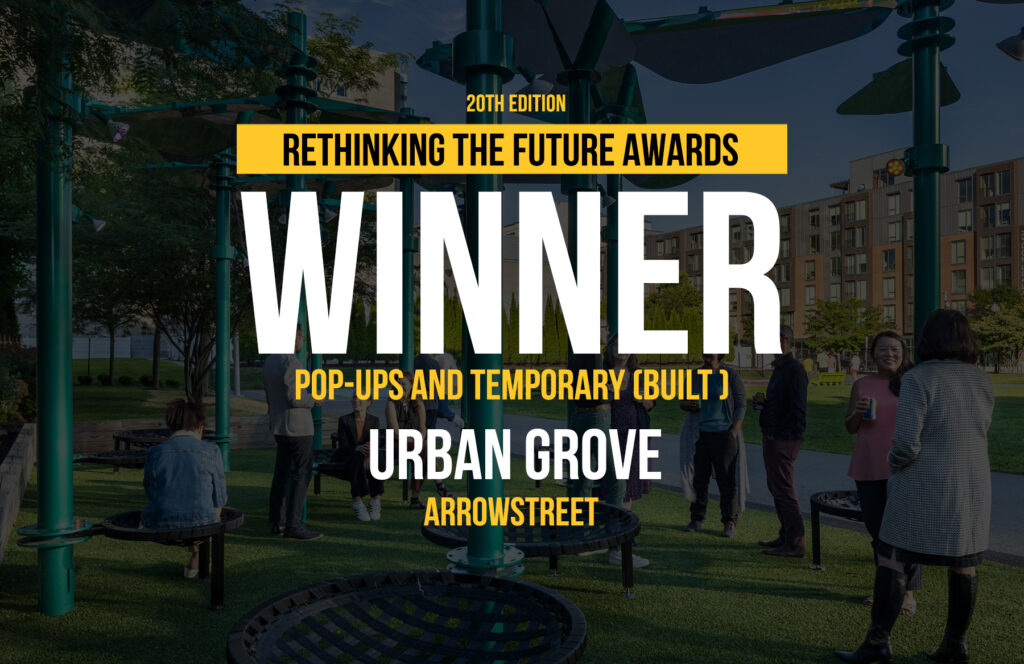
Urban Grove explores how public art can operate as resilient urban infrastructure, balancing interaction, durability, and environmental performance in high-use civic spaces.
Rethinking The Future Awards 2026
First Award | Pop-ups and Temporary (Built)
Project Name: Urban Grove
Category: Pop-ups and Temporary (Built)
Studio Name: Arrowstreet
Design Team: Lauren Haggerty, Jenna Carolan, Diana Khalifeh
Area:
Year: 2024
Location: Boston, MA
Consultants: Kyle Wolfe, ImageOne
Photography Credits: Ed Wonsek
Render Credits: Arrowstreet
Other Credits:

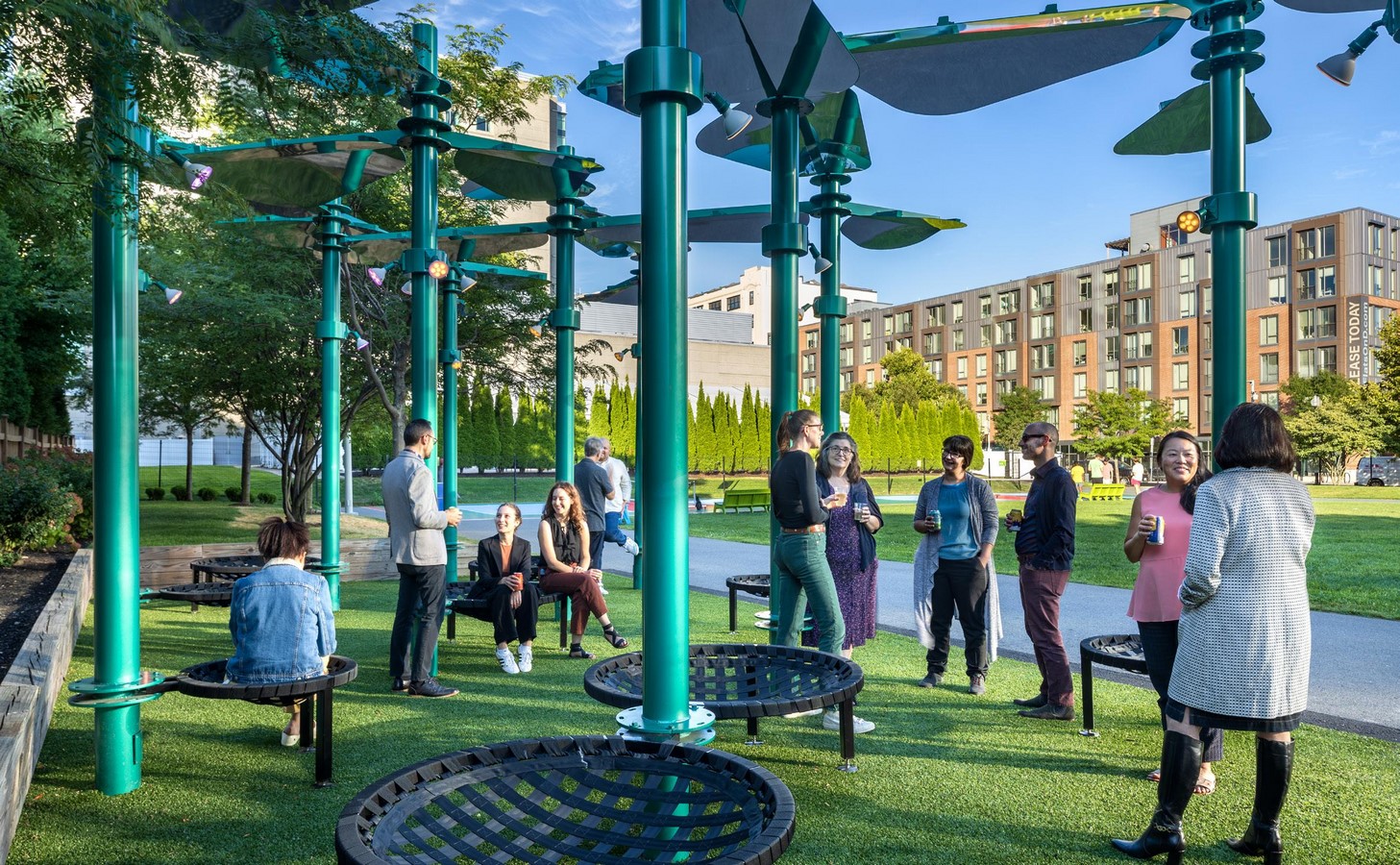
For over a decade, Boston’s Lawn on D has served as one of the city’s most active public gathering spaces, attracting a wide spectrum of users from families and school groups to large-scale corporate events. As part of a broader site refresh, the Massachusetts Convention Center Authority commissioned Urban Grove to replace an iconic but aging installation that had become maintenance-intensive under heavy public use.

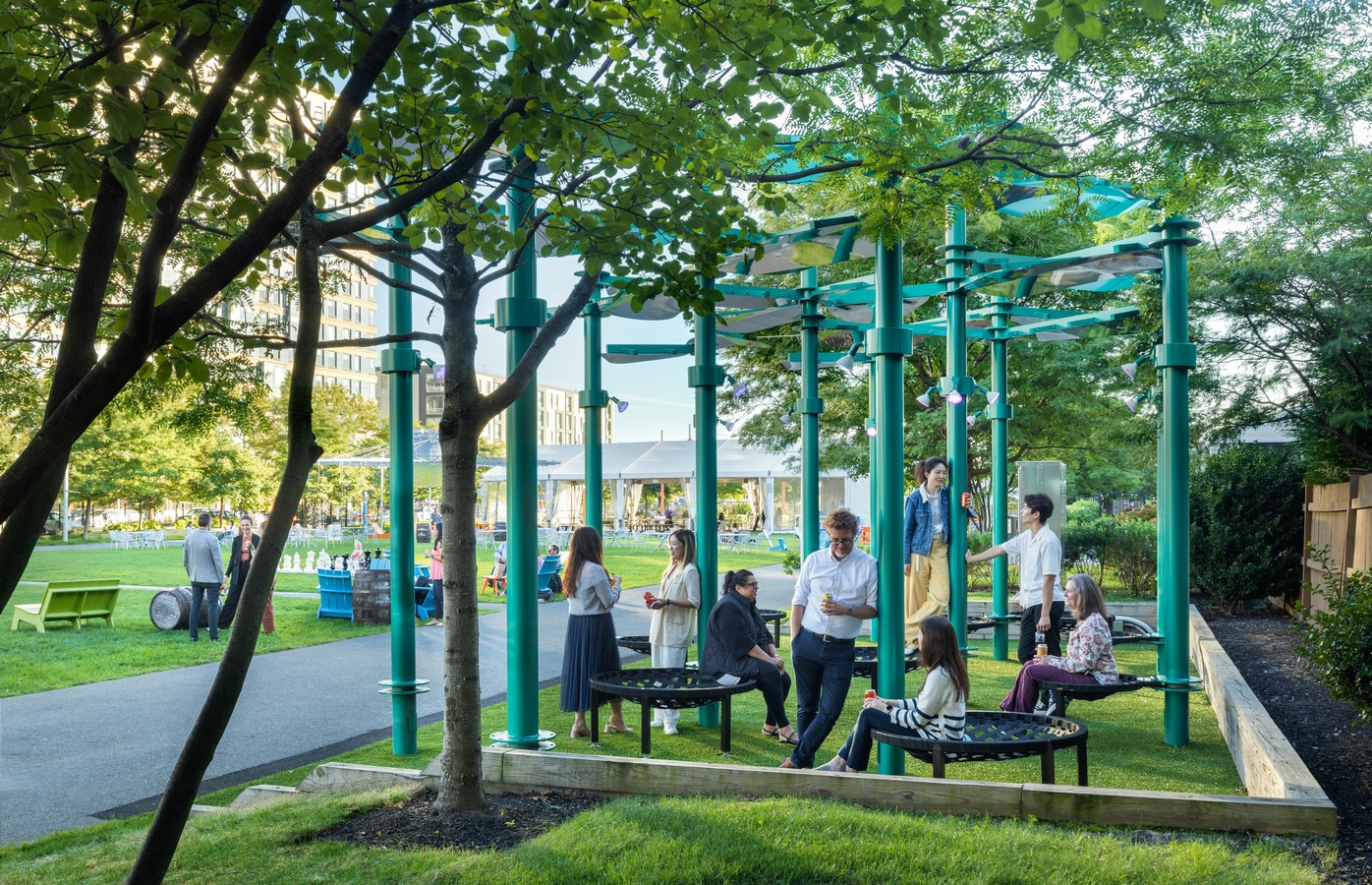

The project was conceived not simply as a new installation, but as a rethinking of how public art can function within high-performance civic environments. The brief called for an interactive, visually compelling intervention that could withstand intensive daily use, accommodate diverse user behaviors, and operate with minimal maintenance over time. A key constraint was the elimination of moving parts, requiring the design to achieve dynamism and engagement without reliance on mechanical systems.

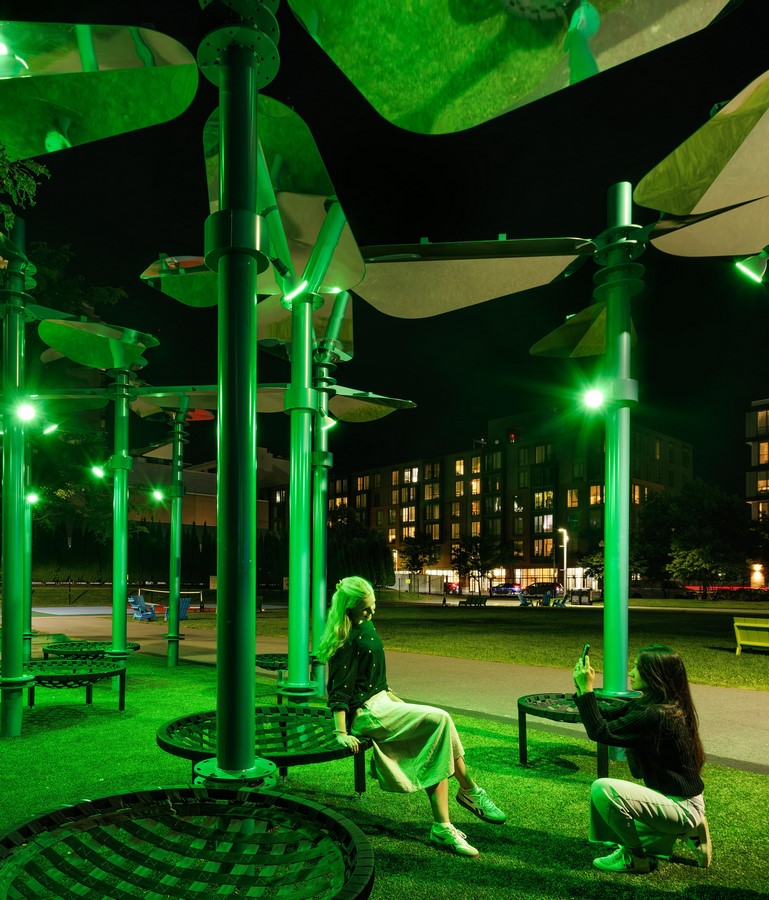
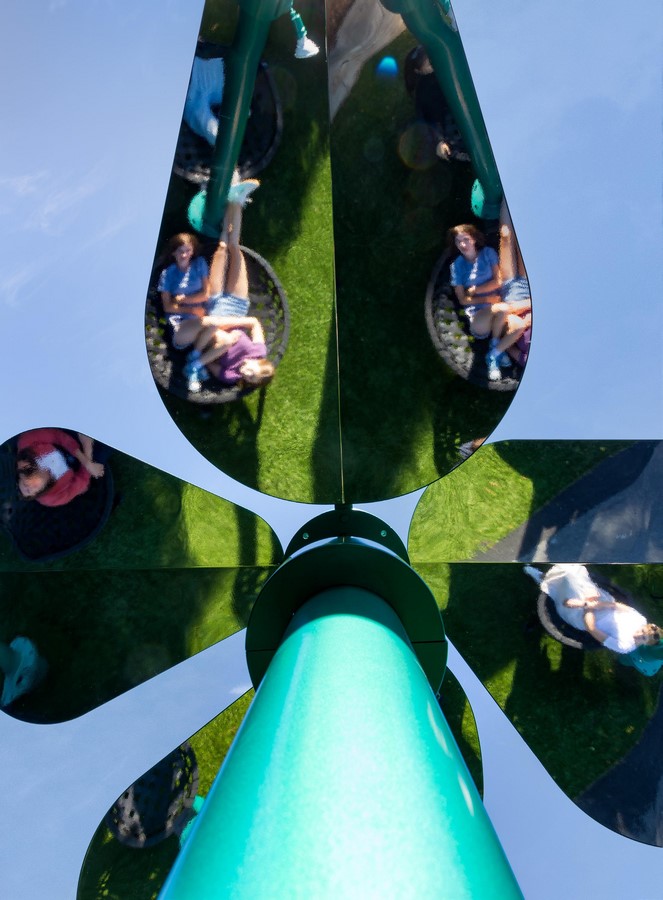
Urban Grove responds with a modular landscape of sculptural “trees” and integrated seating elements that blur the boundary between art, infrastructure, and environment. Reflective canopies extend the experience vertically, creating an immersive field of light, movement, and shade, while circular “nests” provide flexible spaces for gathering, rest, and play. The installation is designed to support both informal daily use and large programmed events, adapting to shifting patterns of occupation throughout the day and across seasons.

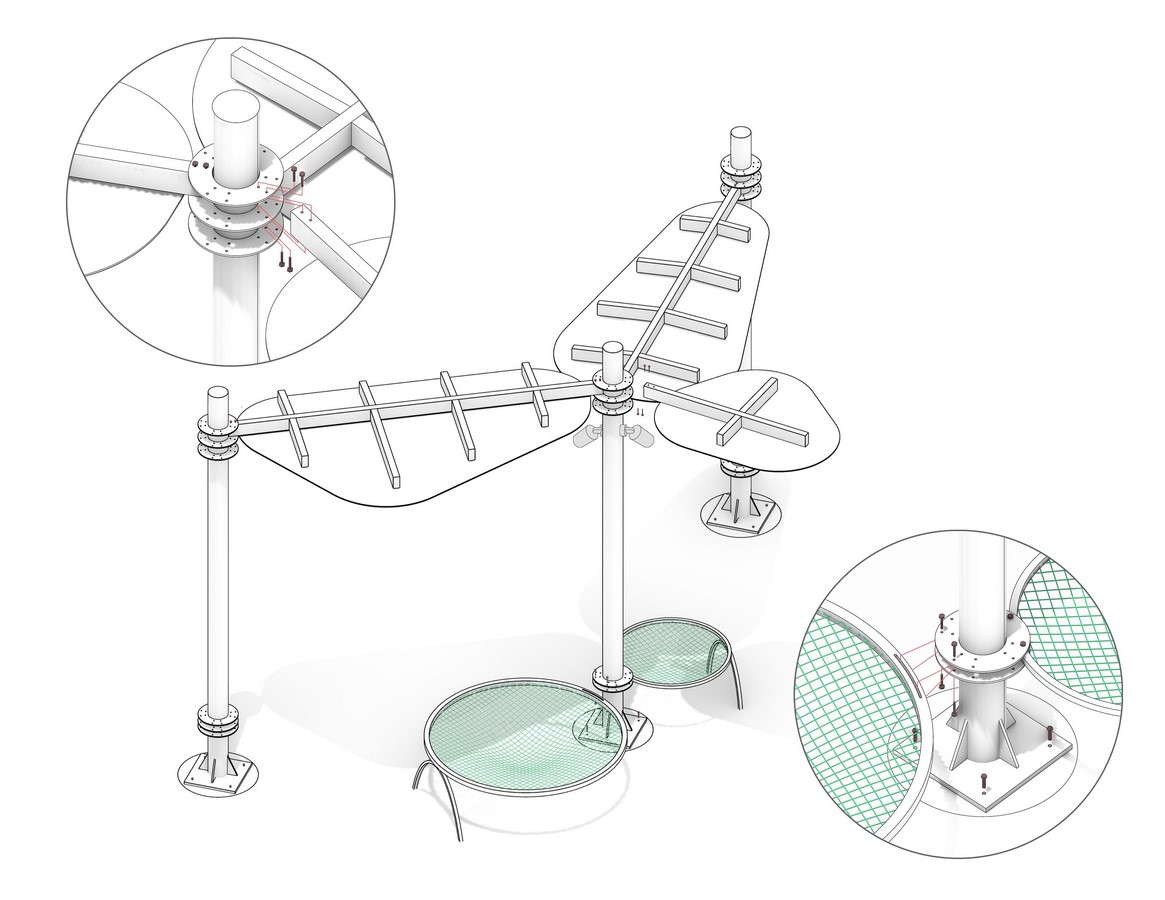
Material and construction strategies prioritize durability, adaptability, and lifecycle performance. Composed of steel and aluminum components, the system is engineered for long-term outdoor exposure in Boston’s coastal climate. All elements are mechanically fastened and modular, allowing for efficient maintenance, repair, and future expansion without significant material waste.

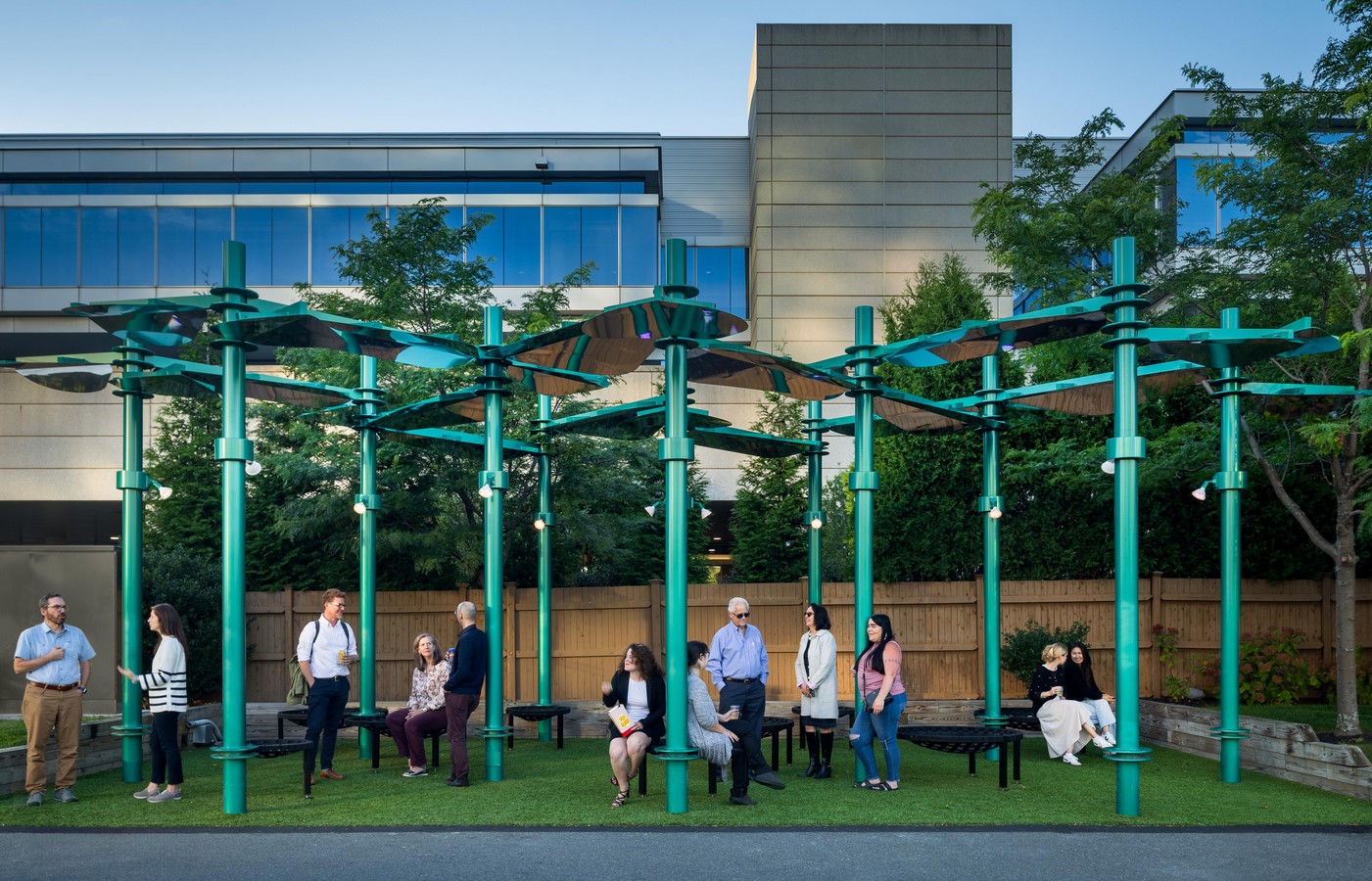
By transforming a previously impervious and underperforming surface into a shaded, interactive environment, Urban Grove contributes to urban heat mitigation while enhancing the social and economic vitality of the site. The project demonstrates how public art can move beyond static objects to become responsive, resilient systems capable of evolving with the communities they serve while minimizing resource consumption over time.


