


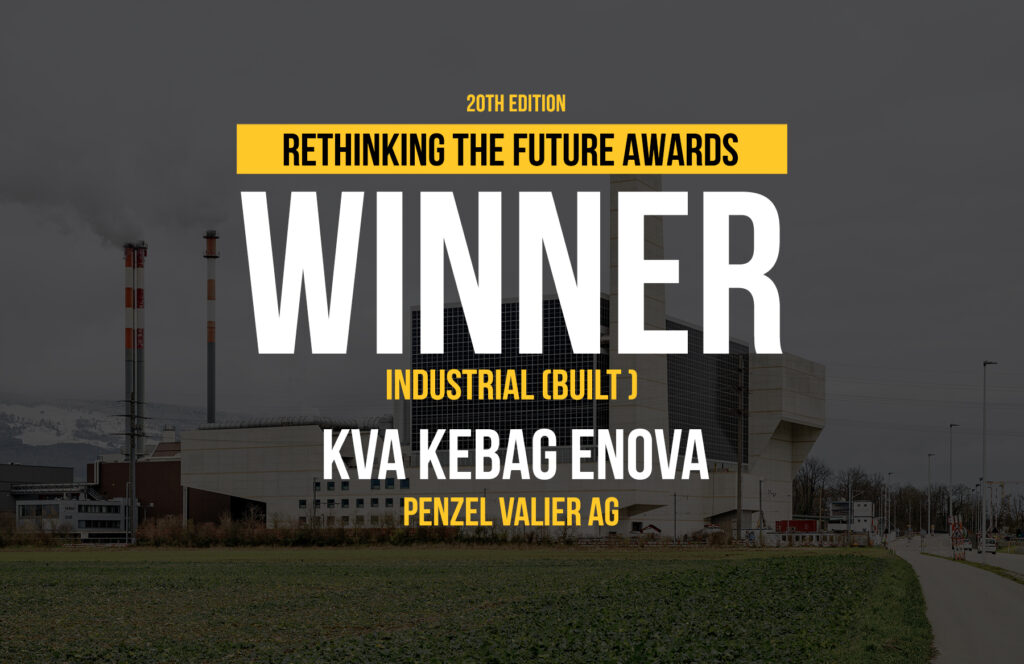
KVA Kebag Enova is a new waste-to-energy facility located at the southern foot of the Jura Mountains, between the edge of Solothurn and the floodplain of the Aare River. Conceived as a replacement for the former plant from the 1970s, the project redefines essential infrastructure as an integrated architectural, technological, and landscape landmark.
Rethinking The Future Awards 2026
First Award | Industrial (Built)
Project Name: KVA Kebag Enova
Category: Industrial (Built)
Studio Name: Penzel Valier
Design Team:
ARCHITECTURE: Apostolos Apostolinas, Leonore Daum, Ecem Dönmez, Timon Dönz, Agnes Eklund, Cait Elliott, Jan Erismann, Liam Gerber, Roland Hasler, Christian Klein, Leo Kleine, Magnus Lidman, Christian Penzel, Heinz Rempfler, Sven Semmisch, Johannes Süssbier, Friedrich Tellbüscher, Martin Valier, Philippe Vaucher, Henning Vogel, Daniel Zielinski
Area: 44’000 m²
Year: 2025
Location: Emmenspitz, Zuchwil – Switzerland
Consultants: General planner: TBF+Partner, Zurich
Photography Credits:
Architectural photography: Bruno Augsburger, Zurich;
Render Credits:
Other Credits:

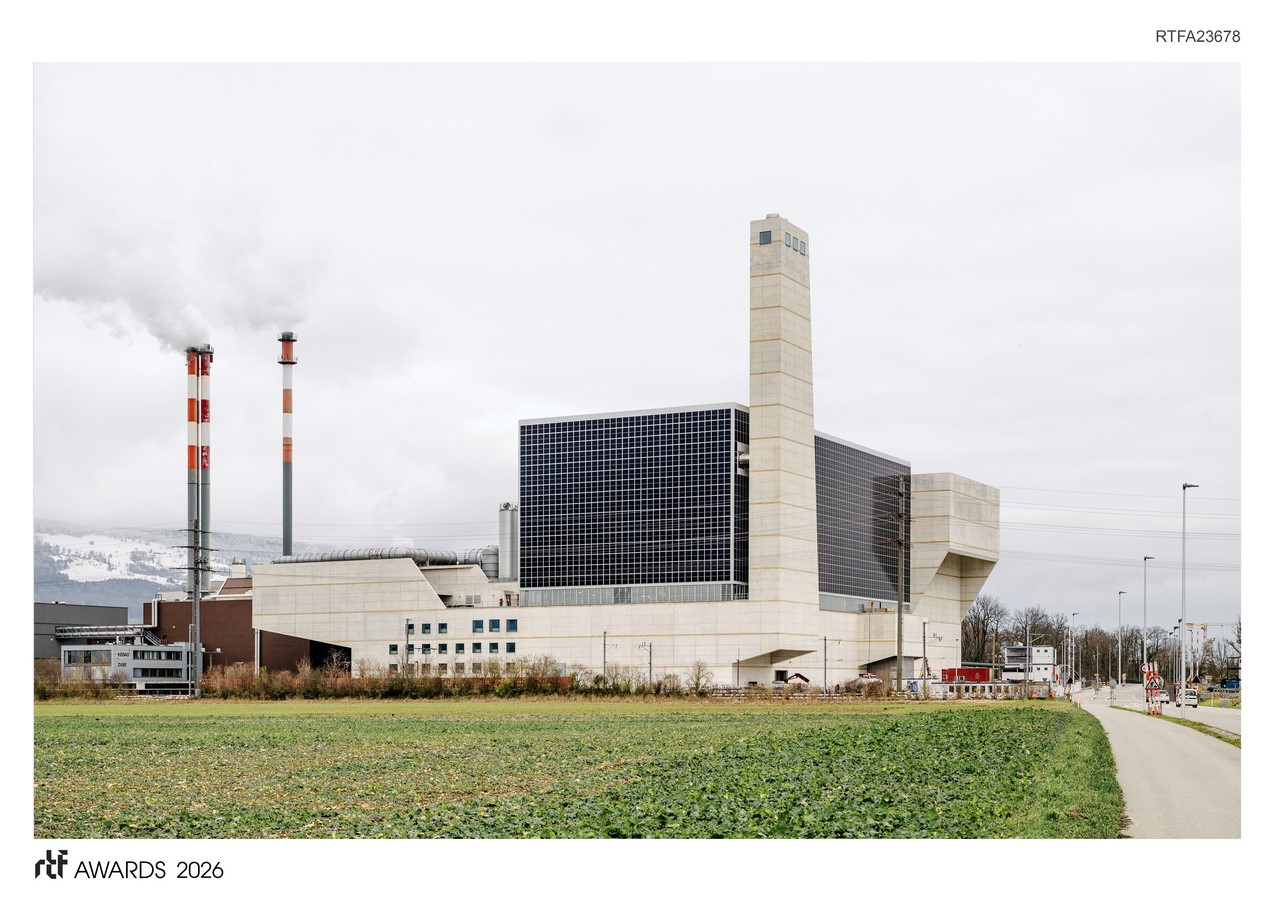
The design translates the plant’s process logic directly into architectural form. A massive concrete base anchors the building in the terrain and houses the waste bunkers and structurally demanding functions. Above it, a lighter, aluminum-clad volume encloses the combustion and energy-recovery systems, marked by a continuous ribbon window that provides daylight and visual access to the machinery hall. Rising alongside the process volume, the sculptural chimney forms a vertical landmark and public point of orientation.
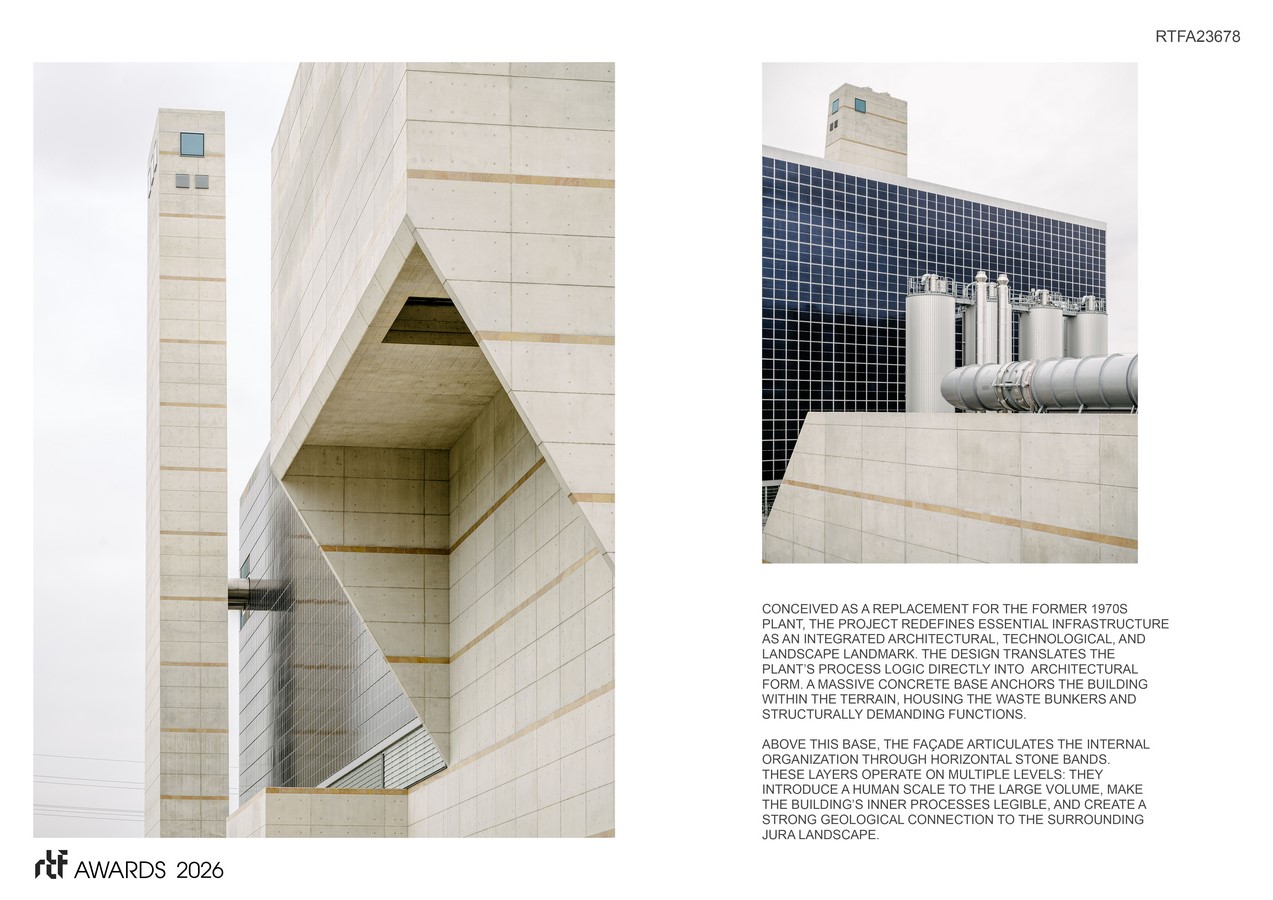
Material and construction strategies emphasize durability, sustainability, and regional identity. Locally sourced natural stone is embedded directly into the concrete façade using a specially developed technique, while recycled concrete and low-carbon cement significantly reduce embodied emissions. Integrated photovoltaic façades and roof panels transform the building itself into an energy producer.
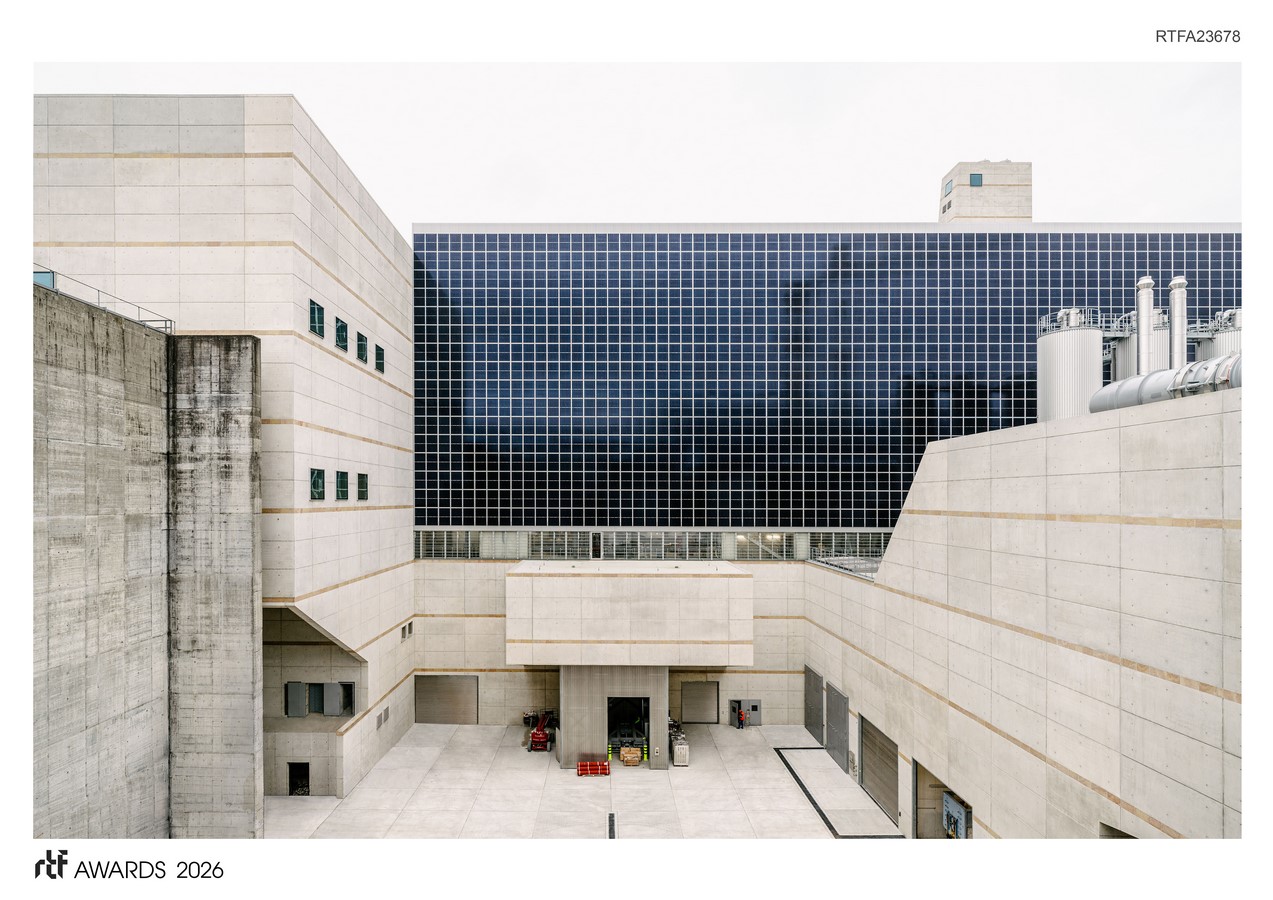
The structural design responds to exceptional technical demands, including large spans, heavy equipment loads, and significant cantilevers. The load-bearing grid of the furnace lines continues seamlessly into the base structure, allowing efficient force transfer. Tall shear walls support the process-related cantilevers required for bunker tubes.
A particularly demanding element is the approximately 25-meter cantilever for the air condenser, necessary for air intake. This structure is stabilized by prestressed cables and acts as a counterweight to the prestressed chimney tower on the opposite side of the building. These solutions demonstrate how structural engineering was integrated into the overall architectural concept rather than treated as a purely technical necessity.
Material choice was guided by functional performance, durability, and environmental impact. Concrete was used wherever structural strength, fire resistance, and robustness were essential, particularly in the bunker and base structures. To counteract the potentially monolithic appearance of large concrete surfaces, the façade is articulated with horizontal bands of locally sourced natural stone.
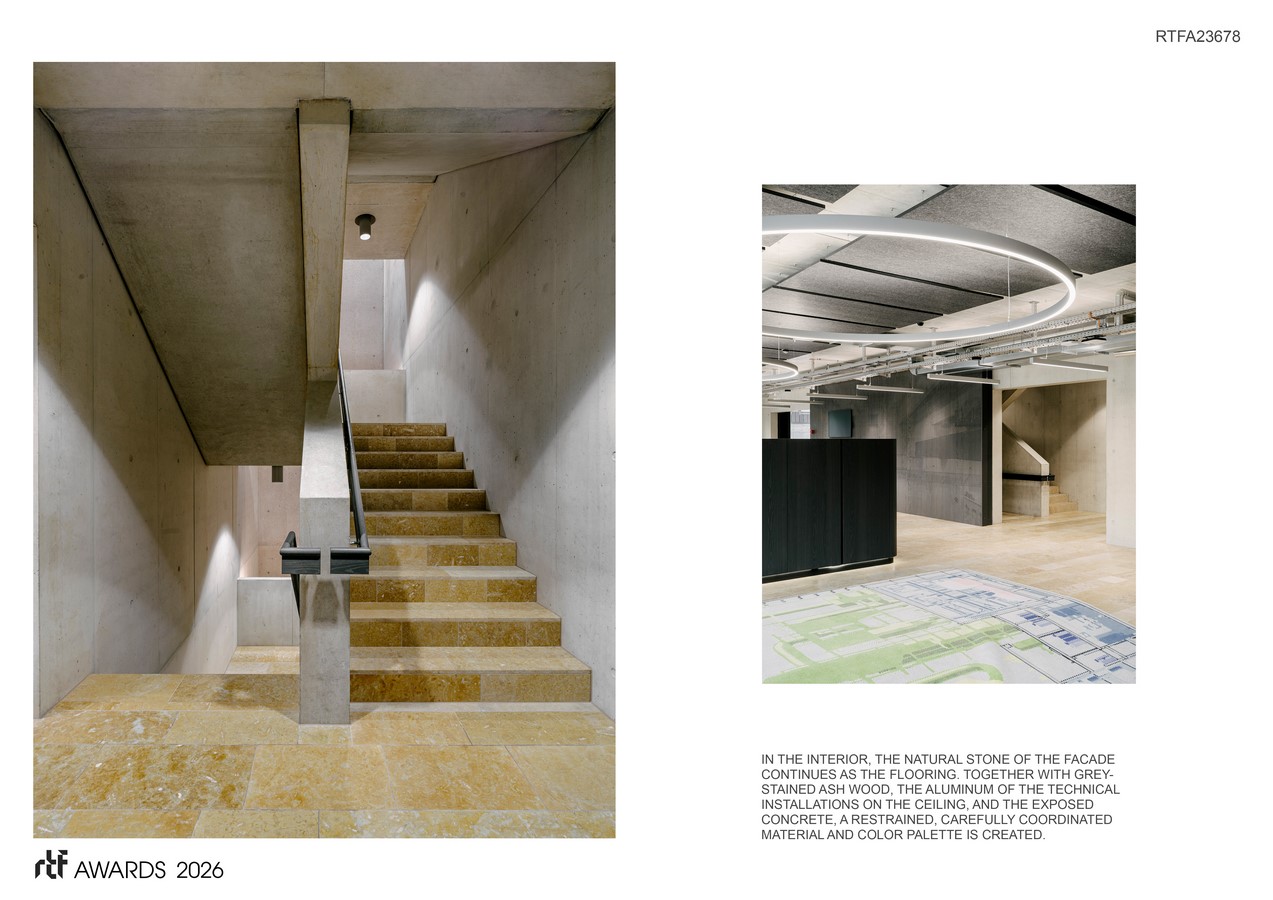
A key innovation of the project is the proprietary method developed to embed natural stone slabs directly into the concrete during casting. This technique was conceived early in the design process and validated through full-scale mock-ups in collaboration with formwork specialists and contractors prior to tendering. The solution was later implemented precisely according to the design specifications.
The stone bands serve multiple purposes: they provide a human scale, express the internal organization of the building, conceal horizontal construction joints, and establish a strong geological connection to the Jura landscape. The interlocking of concrete and stone anchors the building as a site-specific, sculptural landmark.
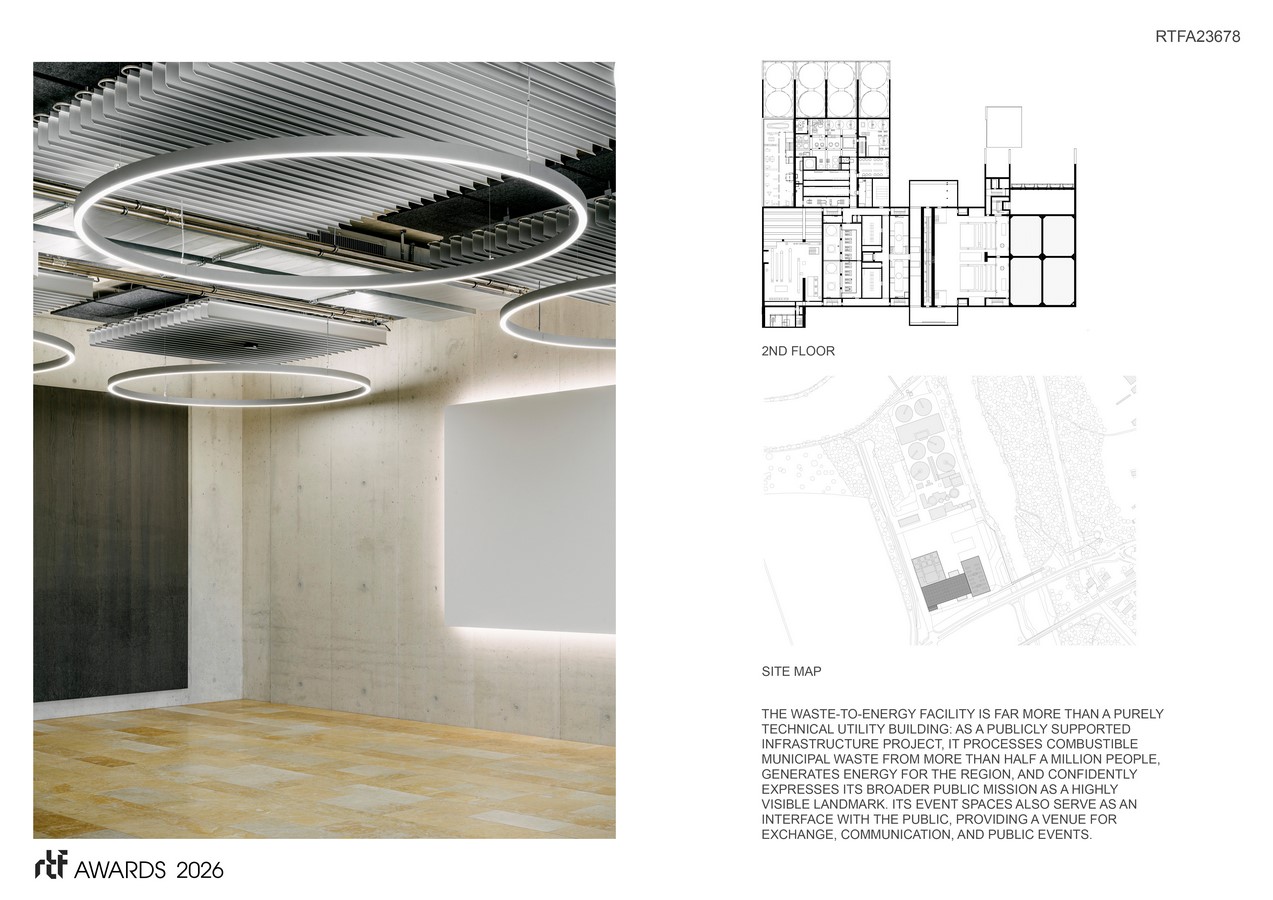
KVA Kebag Enova demonstrates how large-scale industrial infrastructure can combine technical precision and architectural clarity, making the transformation of waste into energy visible, legible, and regionally meaningful.


