


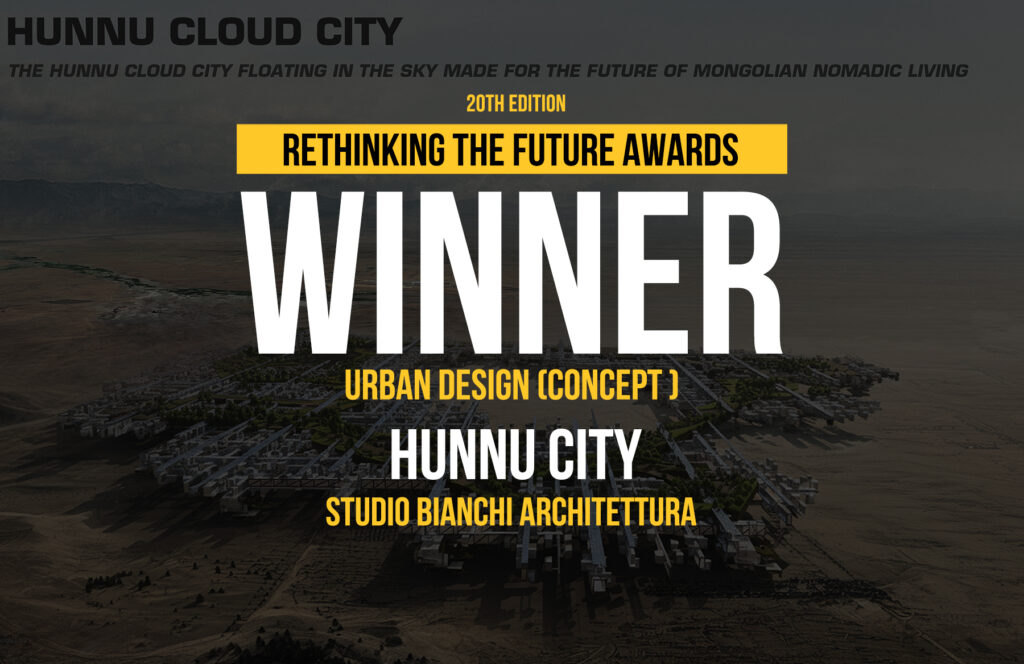
Hunnu Cloud City is a visionary urban project that reinterprets Mongolia’s ancient nomadic traditions in a contemporary way. It is based on the idea that a modern city can remain deeply respectful of nature, land, and ecological balance, while also addressing global challenges such as climate change and the digital transformation. The central concept of the project is the “cloud”: a light, almost invisible structure that floats above the ground, minimizing its impact on the environment.
Rethinking The Future Awards 2026
First Award | Urban Design (Concept)
Project Name: Hunnu City
Category: Urban Design (Concept)
Studio Name: Studio Bianchi Architettura
Design Team: Sergio Bianchi, Fiorella Campodonico Roy, Olimpia De Sio, Sean Moyano, Silvia Perobelli, Hilal Yilmaz, Felice Gualtieri
Area:
Year: 2025
Location: Mongolia
Consultants:
Photography Credits:
Render Credits:
Other Credits:

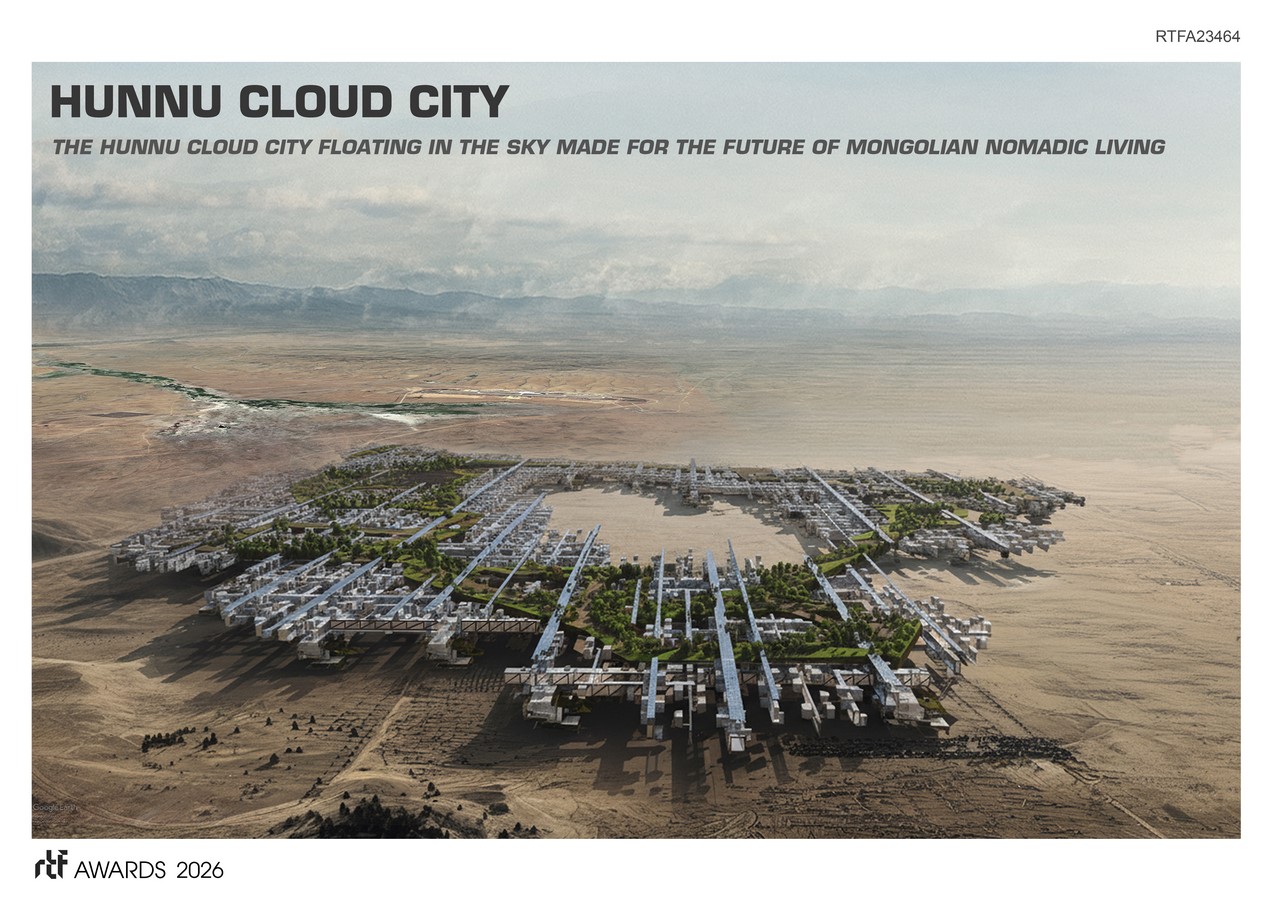
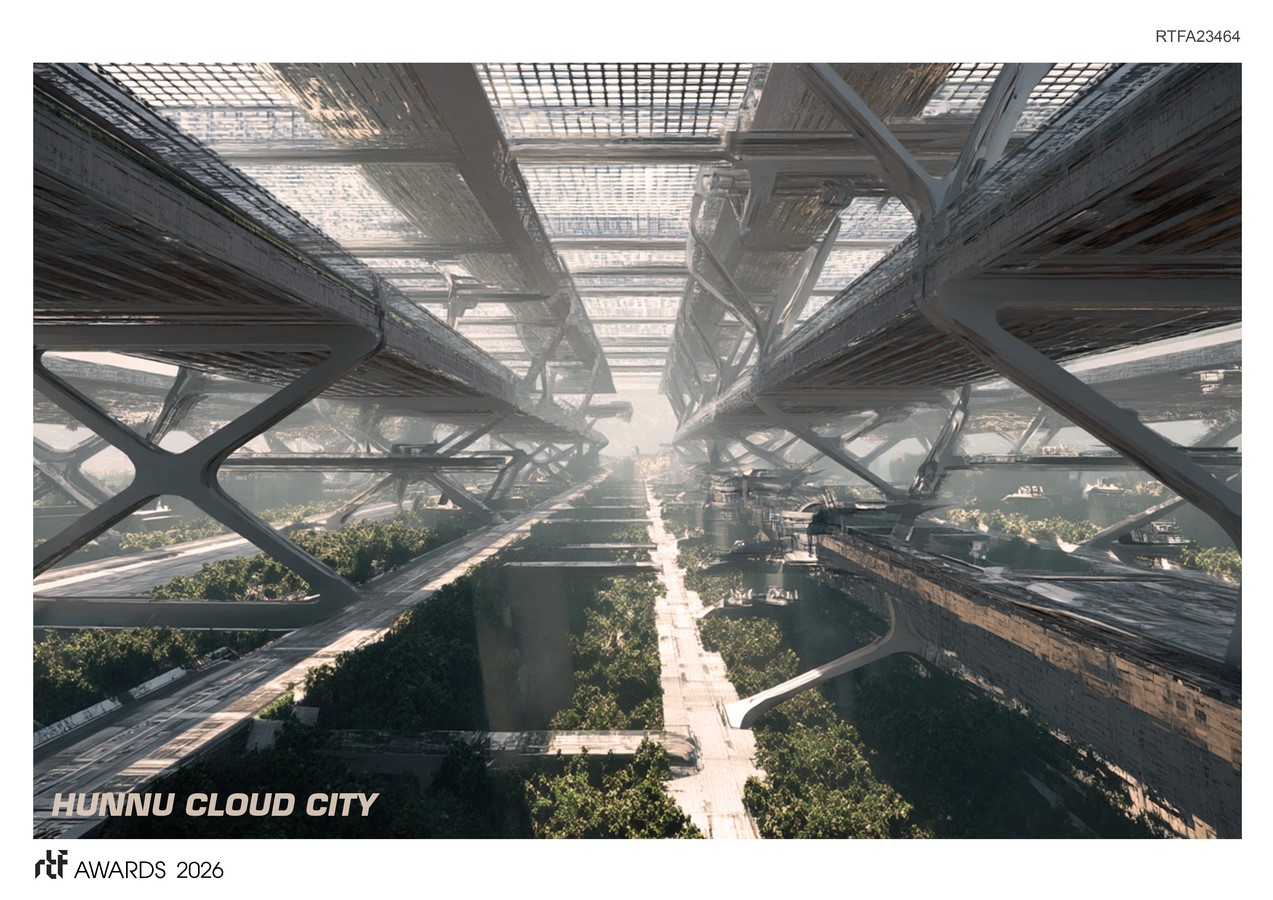
The city is conceived as a suspended habitat, elevated above the steppe to preserve the land below. This design is both architectural and ethical: by lifting human activity into the air, the natural ground remains free, shared by all living species, and untouched by urban development. Reflective materials allow the city to visually blend with the sky, reinforcing the idea of a “floating” and non-invasive presence.
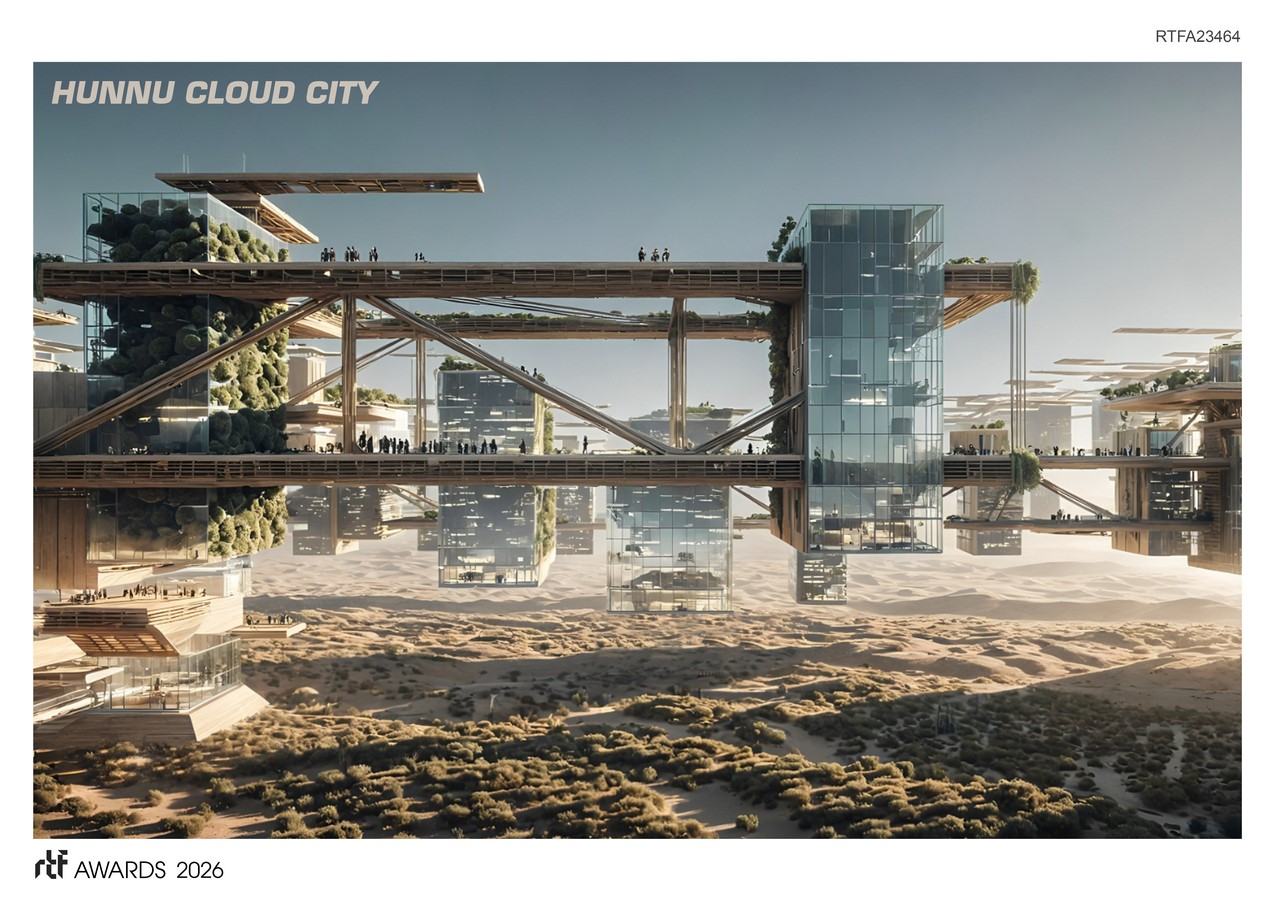
This approach is particularly meaningful in the Mongolian context. Traditional dwellings such as the ger (yurt) are lightweight, adaptable, and climate-efficient. Hunnu Cloud City aims to create a new type of settlement that allows people to maintain this nomadic lifestyle while also accessing education, culture, and economic opportunities. Residents can live in the elevated city while continuing to keep their herds and traditions on the ground below.
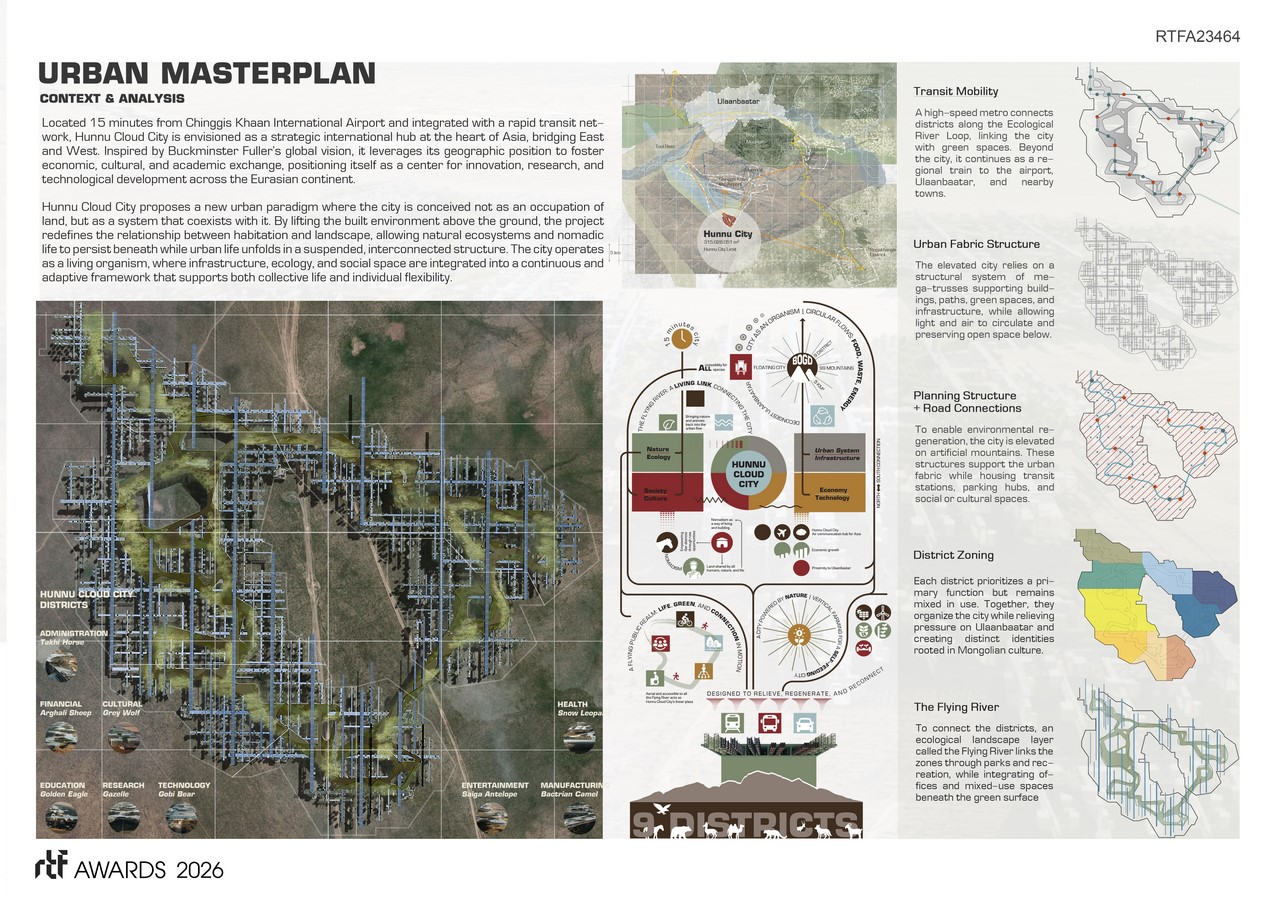
Strategically located near Chinggis Khaan Airport, it aims to become a center for cultural exchange, innovation, and economic development, positioning Mongolia as a key player in a global network.
Hunnu Cloud City supports the transformation of Ulaanbaatar. By offering a new urban alternative, it helps reduce congestion in the capital and opens the possibility to redevelop existing ger districts into greener, more livable environments.
The urban structure of Hunnu Cloud City is compact and organized into nine districts, each with a distinct identity inspired by Mongolian culture and nature. These districts combine different functions—residential, educational, cultural, and economic—creating a diverse and integrated urban system.
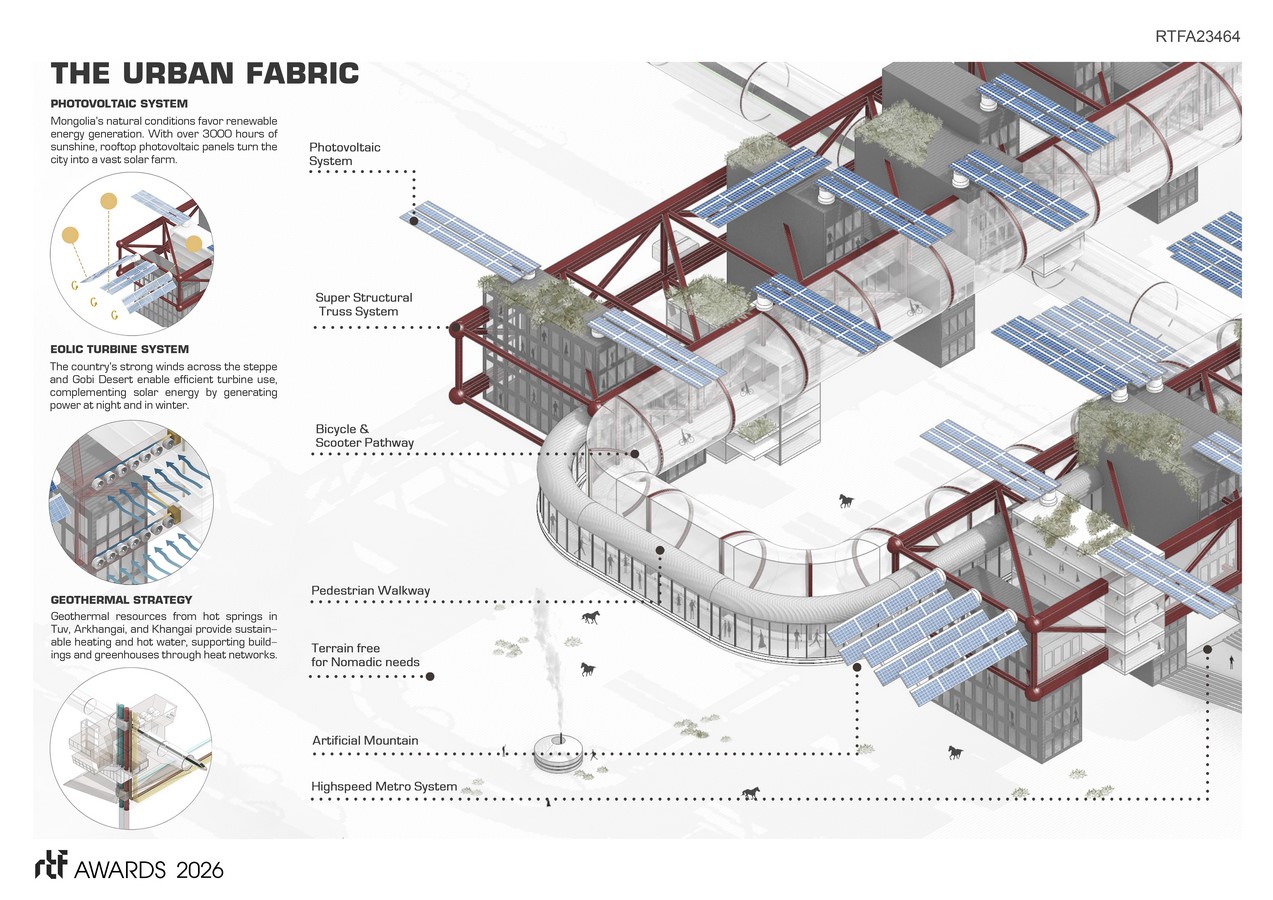
Mobility is designed to be sustainable and efficient. The ground level is largely free of roads, reserved for natural paths and ecological continuity. Transportation relies on an elevated rapid transit loop connecting all districts. Pedestrian movement is centered around the “Flying River,” a continuous elevated green corridor that connects public spaces, neighborhoods, and services.
A key aspect of the project is its focus on self-sufficiency. The city integrates renewable energy sources and uses advanced agricultural systems like hydroponics and aeroponics to produce food locally.
Housing design also reflects a balance between tradition and innovation. Modular, flexible units reinterpret the ger as a collective living system, while allowing residents to personalize and expand their homes over time.
At the heart of the project, the Flying River acts as both infrastructure and symbol: a green spine that combines public space, agriculture, culture, ecological systems and a place of worship for Tenger the Eternal Blue Sky. It represents the union of nature, technology, and human life.
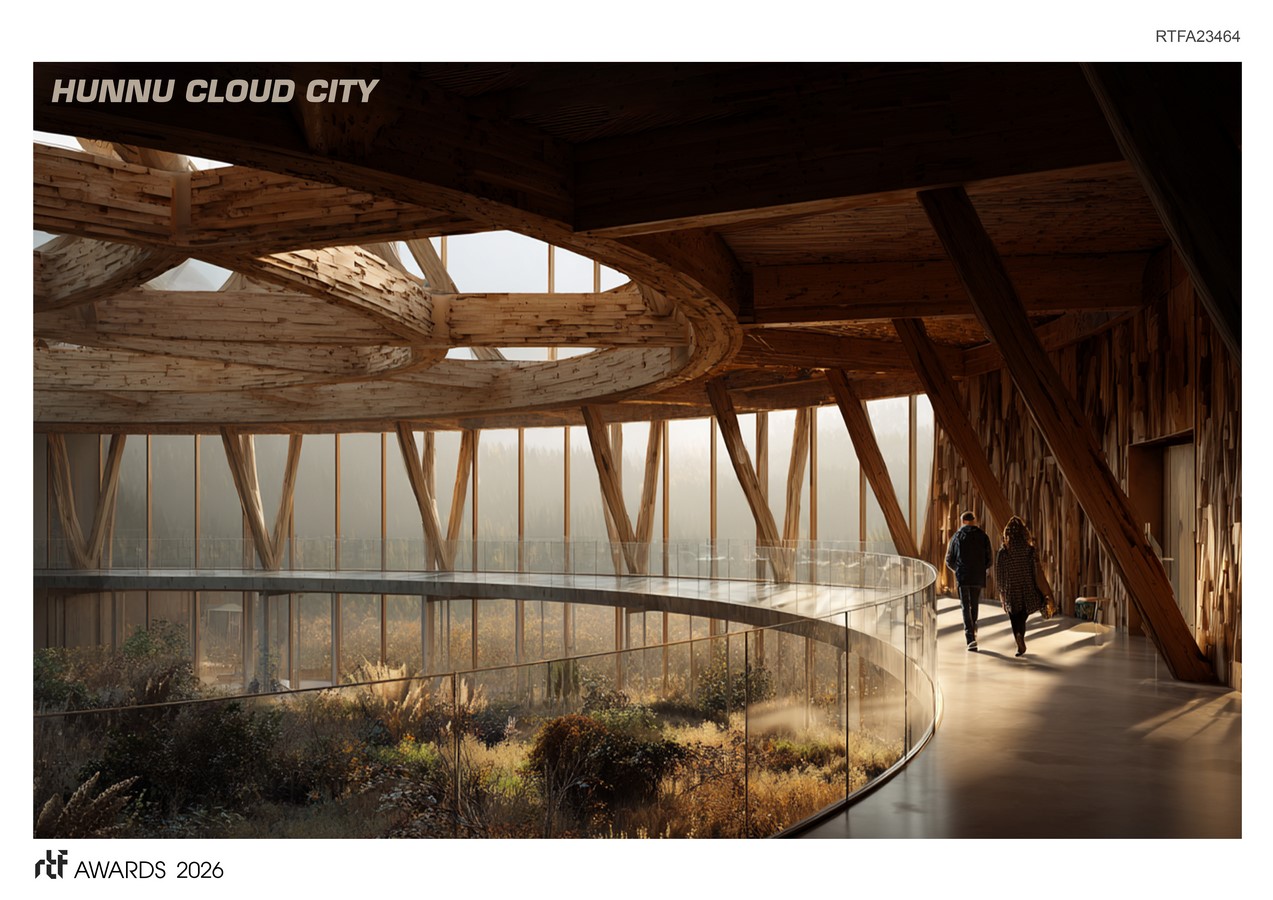
Hunnu Cloud City proposes a new urban model: a floating, sustainable, and adaptive city that preserves cultural identity while embracing innovation, offering a vision for future cities in harmony with the environment.


