


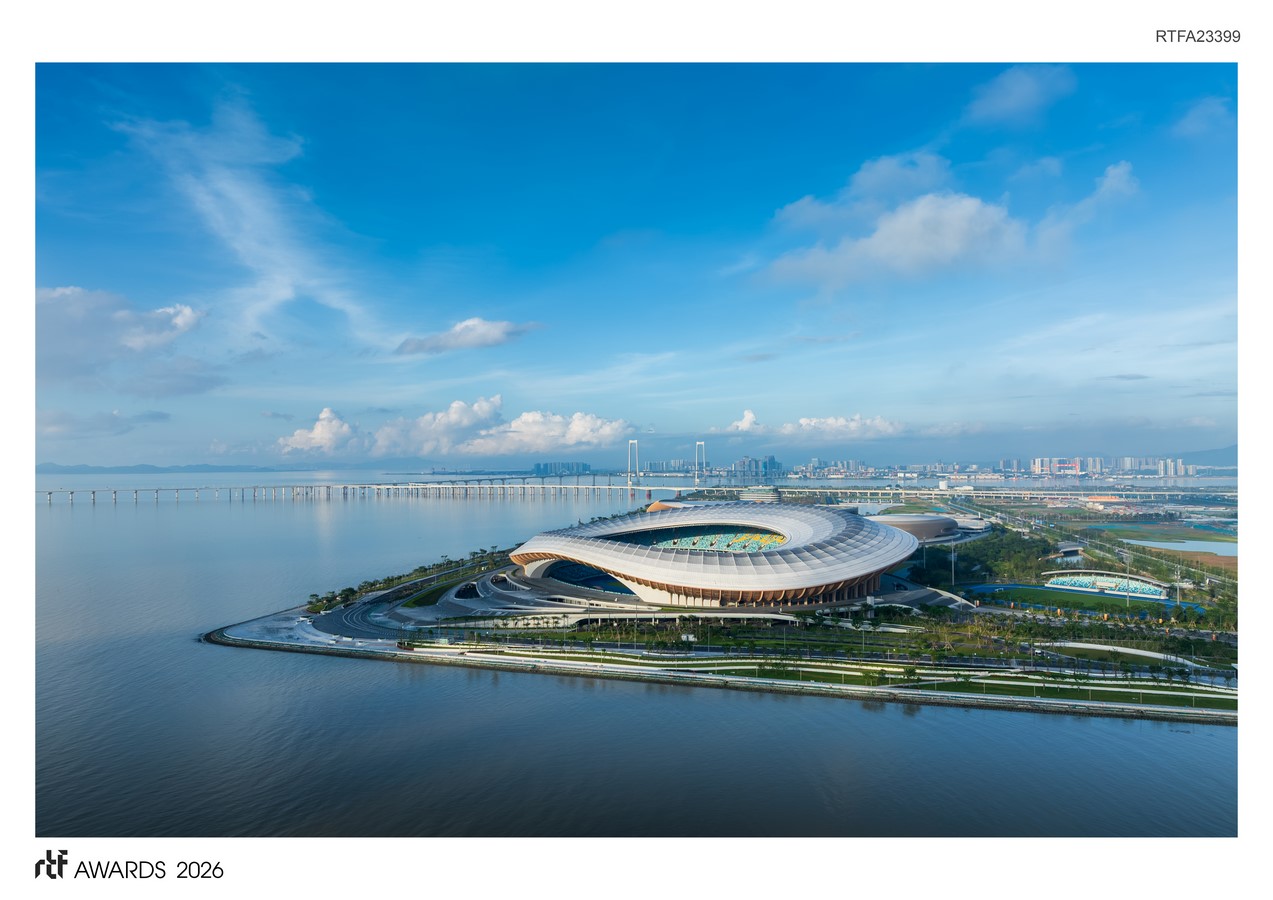
The Guangdong-Hong Kong-Macau Greater Bay Area is the world’s largest conurbation with its population anticipated to reach 100 million by 2030. Situated at the southern end of Guangzhou’s Nansha District on the western bank of the historic Pearl River, the Greater Bay Area Sports Centre will serve as an anchor to the new civic, business and residential district at the heart of the Greater Bay Area.
Rethinking The Future Awards 2026
First Award | Sports & Recreation (Built)
Project Name: Greater Bay Area Sports Centre
Category: Sports & Recreation (Built)
Studio Name: Zaha Hadid Architects
Area: 700,000m²
Year: 2025
Location: Nansha, China
Photography Credits: 张灏 Seilaojiong | CRLand
Render Credits: n/a
Other Credits: n/a

Offering its local community sports facilities of the highest standards, the centre has also been designed to host a diverse programme of major national and international sporting events, as well as cultural performances, that can be easily accessed by all residents of the Greater Bay Area via Line 18 of the Guangzhou Metro and the new Shenzhen-Zhongshan Bridge.
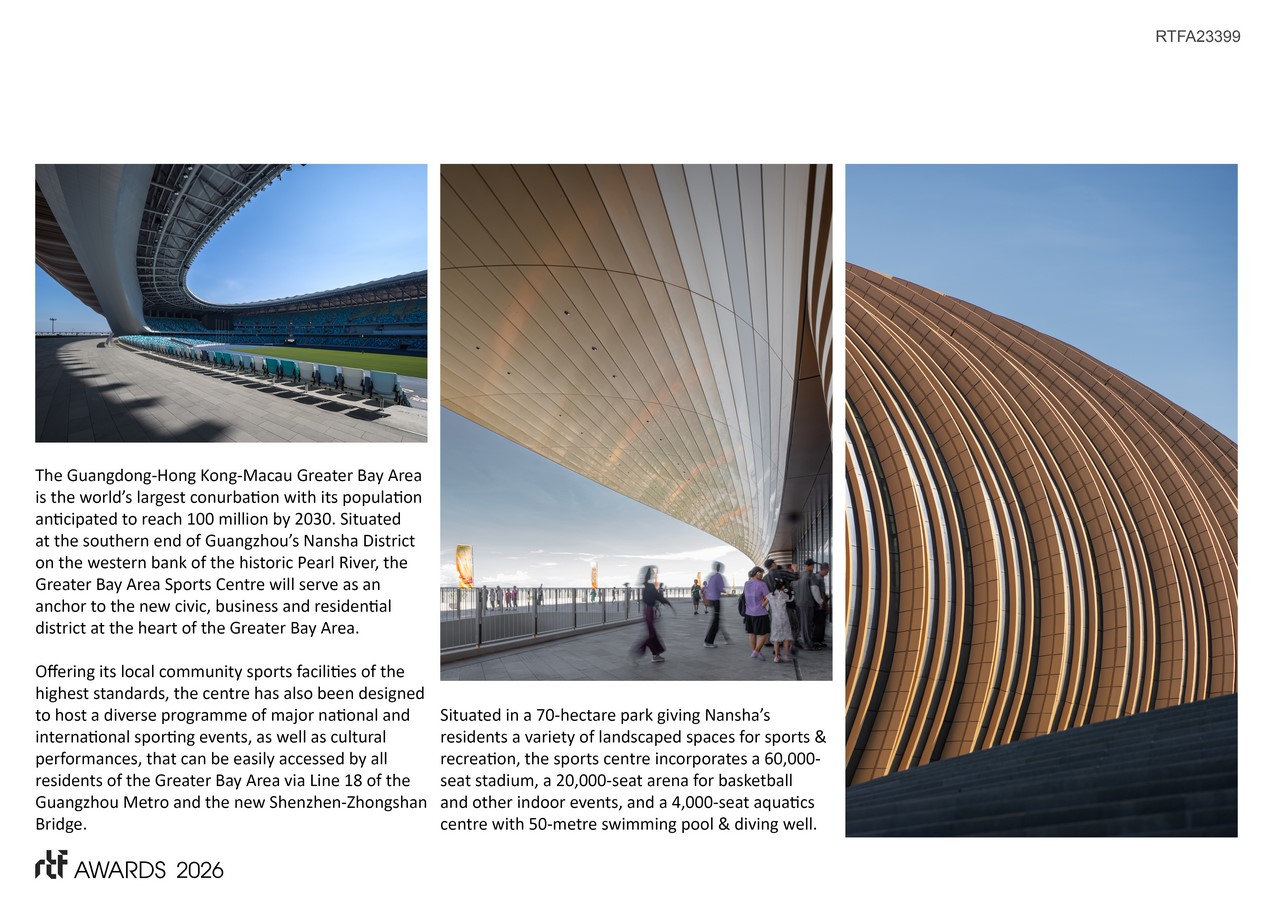
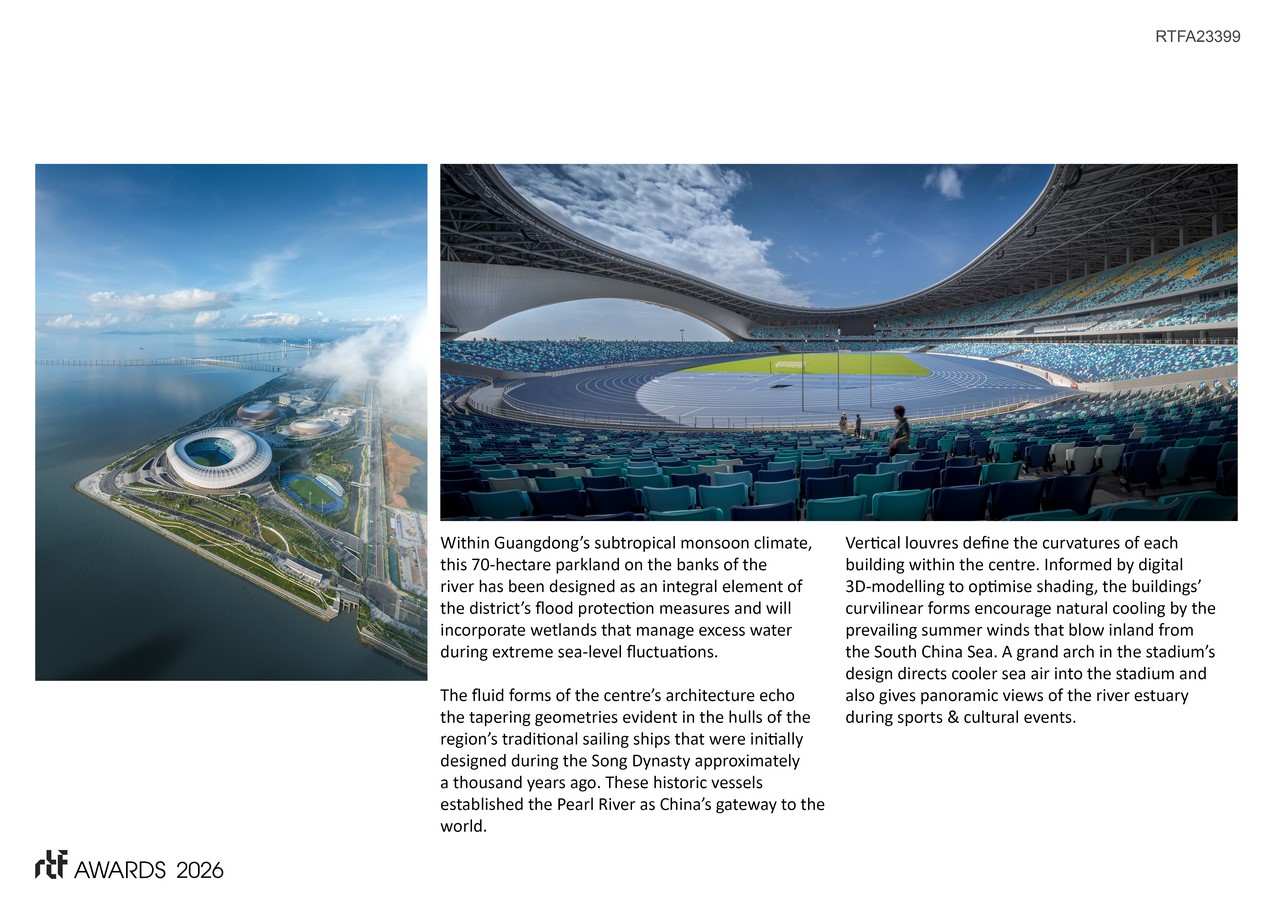
Situated in a 70-hectare park giving Nansha’s residents a variety of landscaped spaces for sports & recreation, the sports centre incorporates a 60,000-seat stadium, a 20,000-seat arena for basketball and other indoor events, and a 4,000-seat aquatics centre with 50-metre swimming pool & diving well.
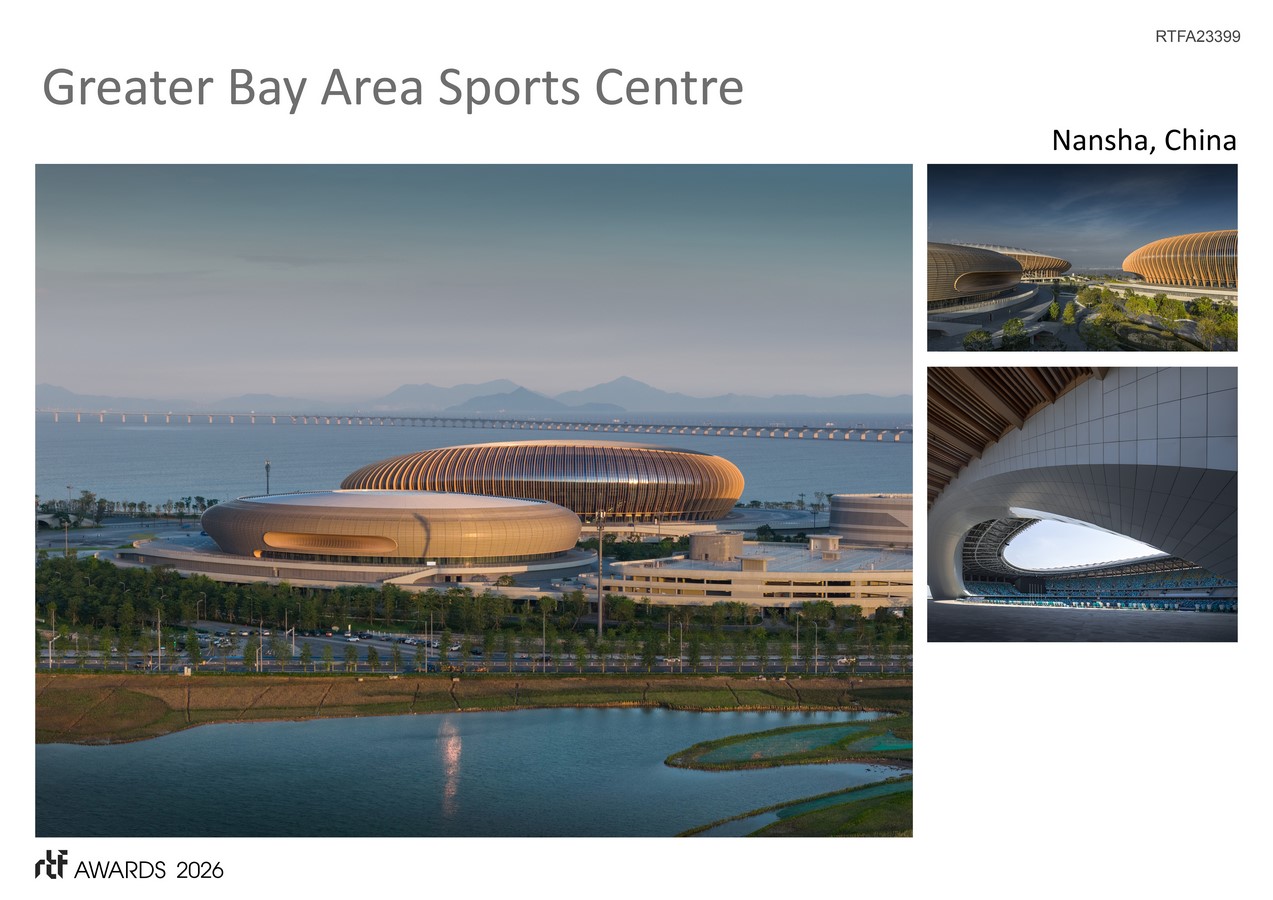
Within Guangdong’s subtropical monsoon climate, this 70-hectare parkland on the banks of the river has been designed as an integral element of the district’s flood protection measures and will incorporate wetlands that manage excess water during extreme sea-level fluctuations.
The fluid forms of the centre’s architecture echo the tapering geometries evident in the hulls of the region’s traditional sailing ships that were initially designed during the Song Dynasty approximately a thousand years ago. These historic vessels established the Pearl River as China’s gateway to the world.
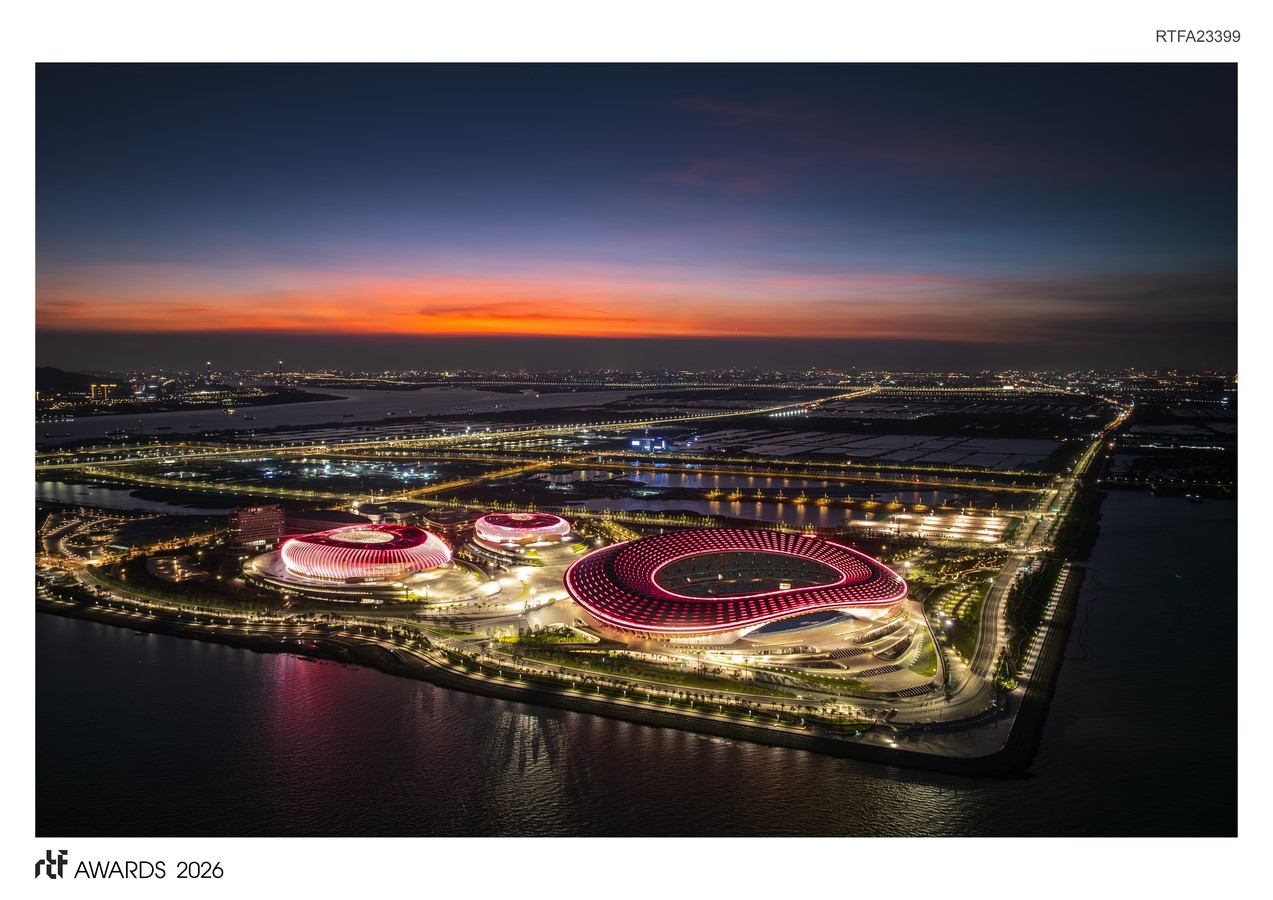
Vertical louvres define the curvatures of each building within the centre. Informed by digital 3D-modelling to optimise shading, the buildings’ curvilinear forms encourage natural cooling by the prevailing summer winds that blow inland from the South China Sea. A grand arch in the stadium’s design directs cooler sea air into the stadium and also gives panoramic views of the river estuary during sports & cultural events.


