


The David Rubenstein Treehouse serves as a new hub for convening at Harvard University: a welcoming destination that energizes conversation and collaboration, and embraces its outdoor environment and surrounding neighborhood.
Rethinking The Future Awards 2026
First Award | Sustainable Project – Architecture (Built)
Project Name: David Rubenstein Treehouse at Harvard University
Category: Sustainable Project – Architecture (Built)
Studio Name: Studio Gang
Design Team: Jeanne Gang, Lead Designer and Founding Partner
Wes Walker, Design Principal and Partner
Mark Schendel, Managing Partner
Bethany Mahre, Design Director
David Swain, Technical Design Director
Andrea Rovetta, Senior Project Leader
With, Lara Kaufman, William Emmick, Margaret Cavenagh, Lauren Eggert, Paul Golisz, Sarah Beaudoin, Liang Hu, Aaron Mark, Colleen Lyell, Seth Byrum, Dylan King
Area: 55,000 sf
Year: 2025
Location: Boston, Massachusetts
Photography Credits: Jason O’Rear
Render Credits: N/A

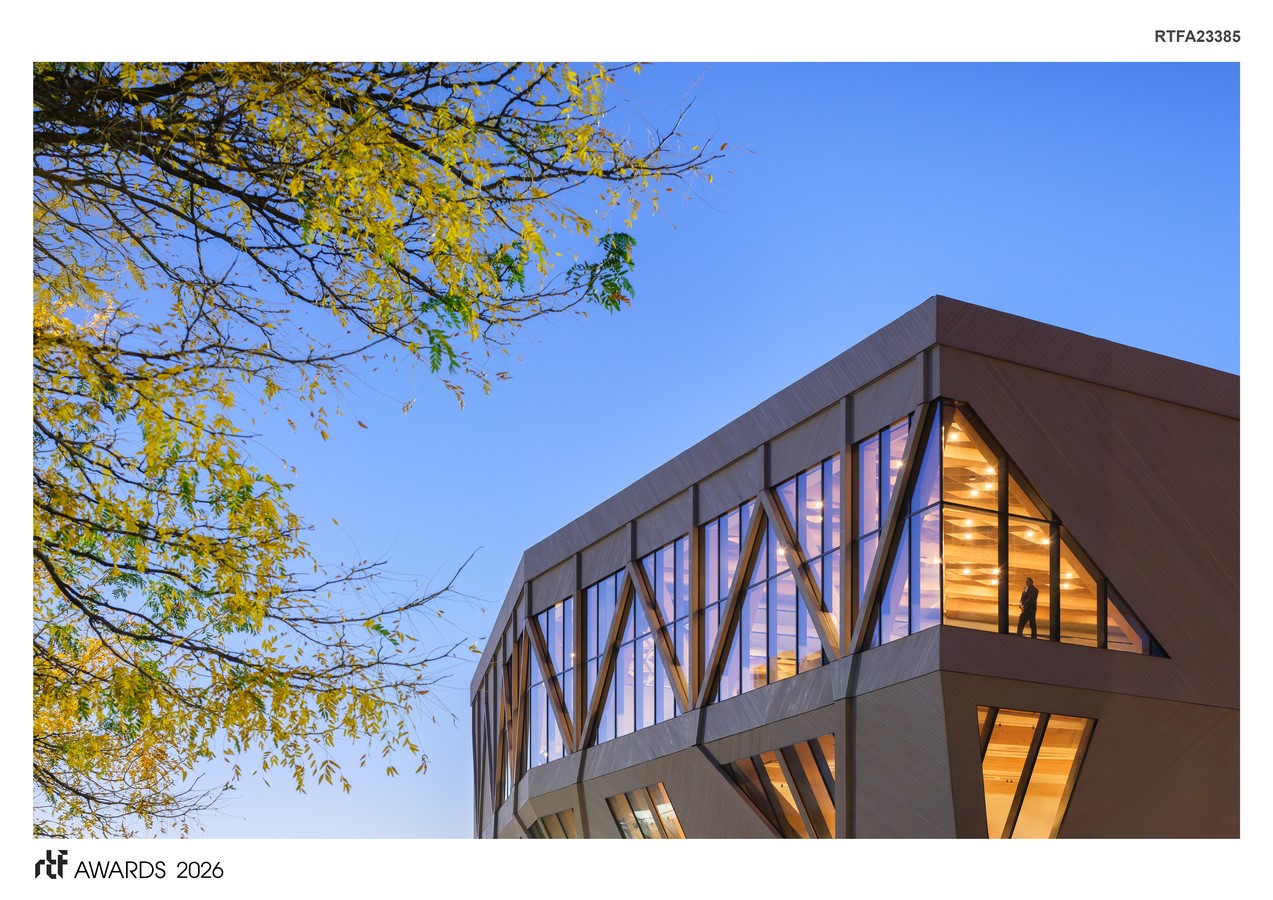
With its expressive structure of mass timber and innovative low-carbon concrete, both firsts for Harvard’s campus, the Rubenstein Treehouse also visibly models a more sustainable and healthier way of building for Boston and institutions worldwide.
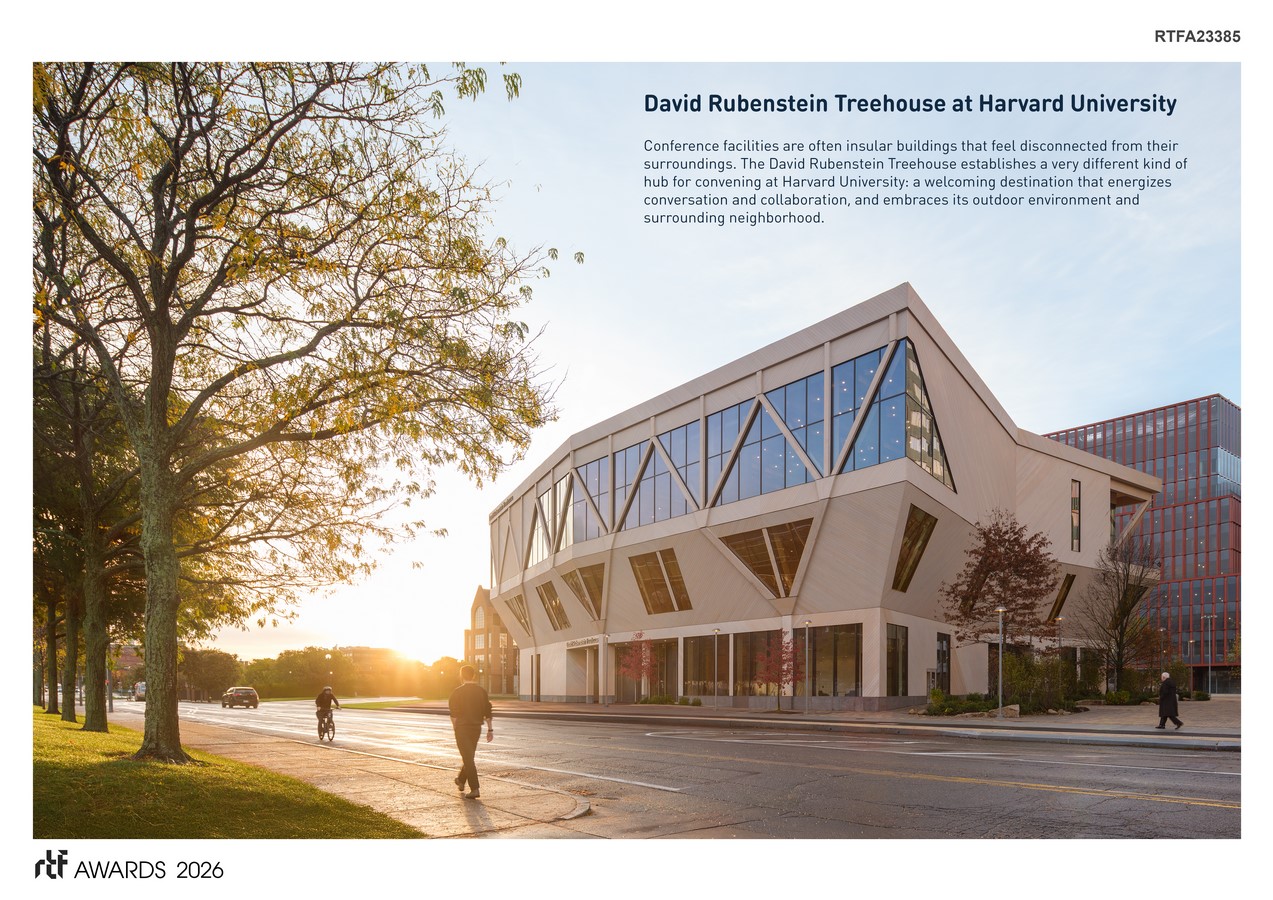
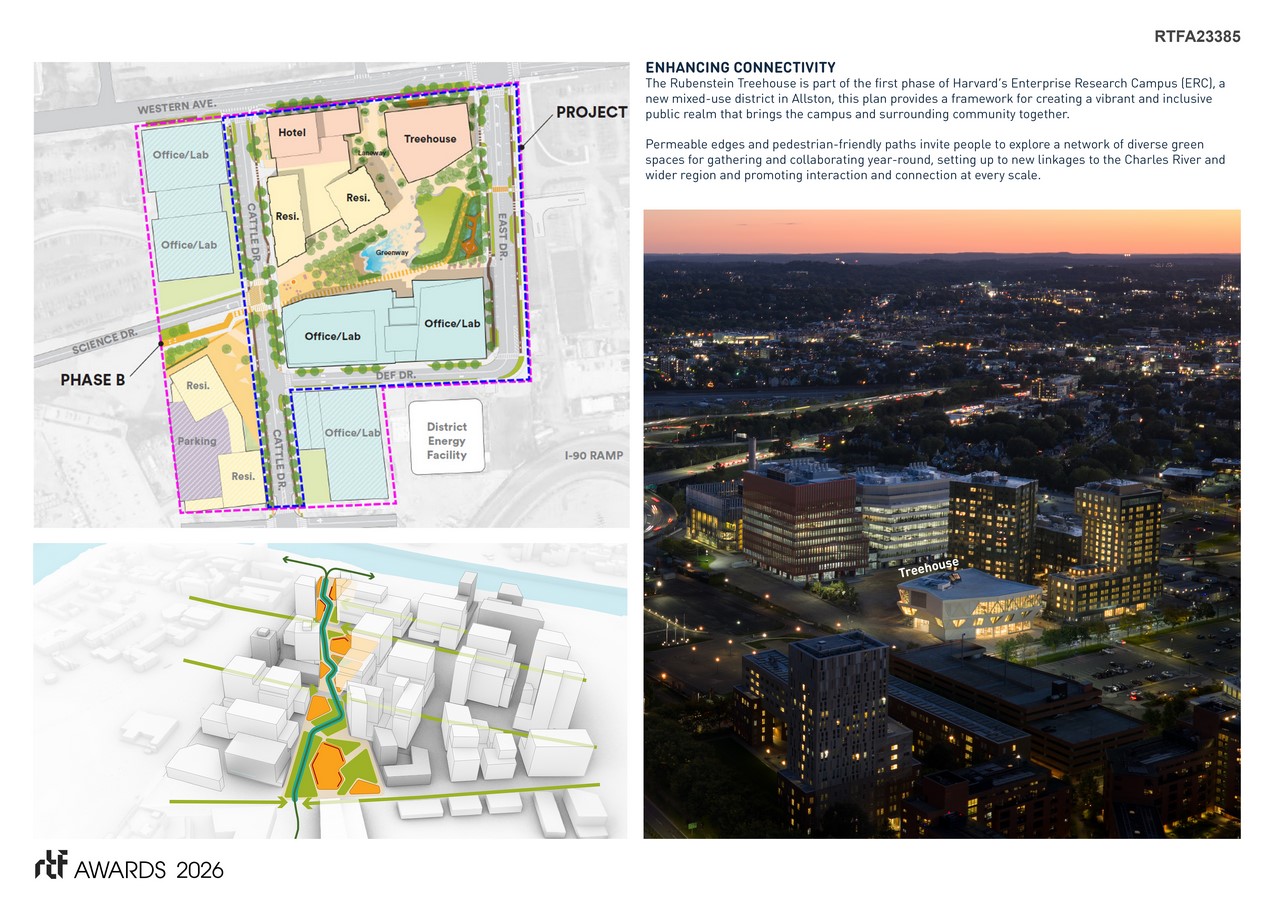
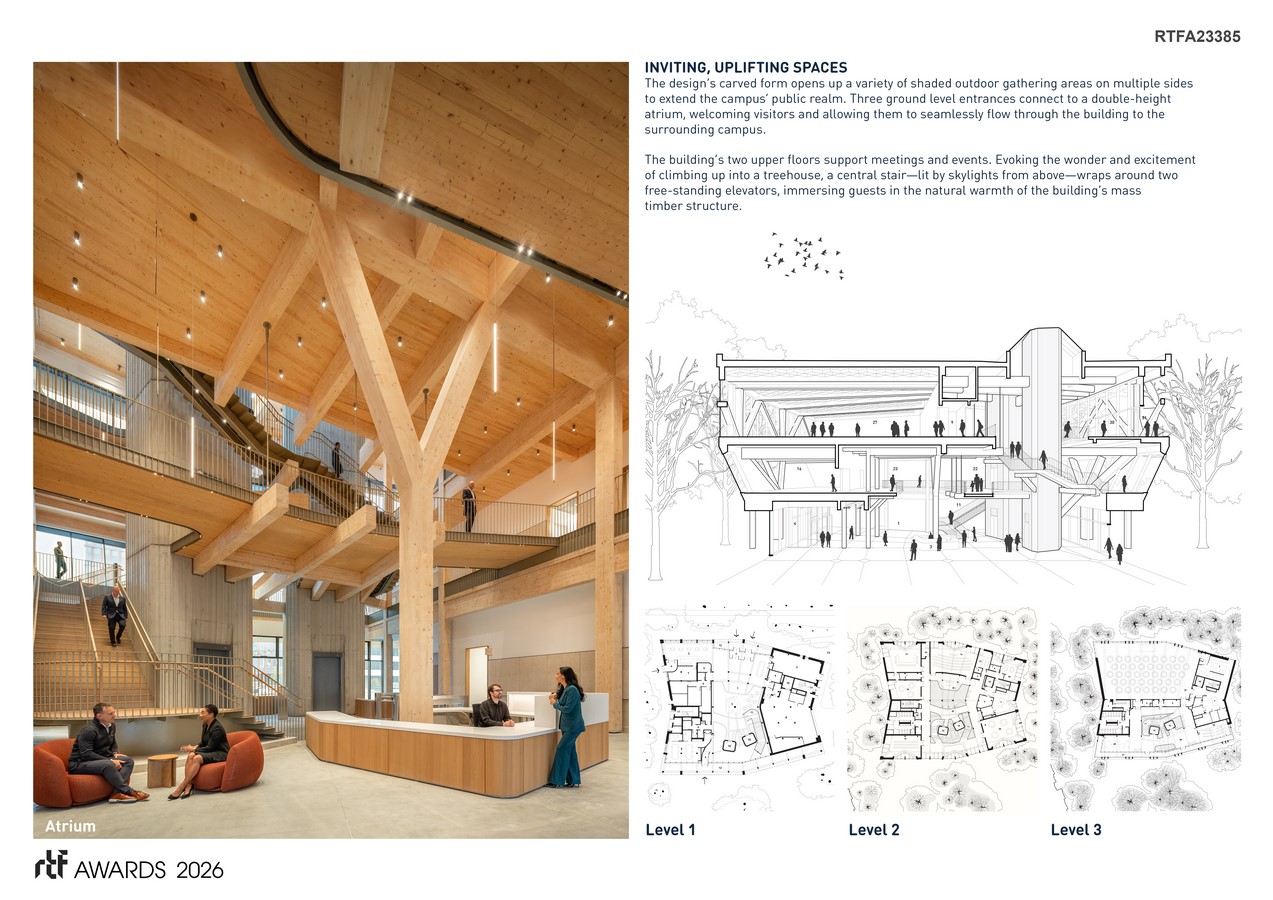
Part of the first phase of Harvard’s Enterprise Research Campus, the 55,000-square-foot Rubenstein Treehouse provides dedicated event space and meeting amenities for Harvard affiliates, the community, academia, and industry and business leaders from around the globe. On the ground level, three entrances connect to a double-height atrium, welcoming visitors and allowing seamless flow to the surrounding campus. The atrium spills outward onto two covered porches that create year-round outdoor gathering areas. Evoking the wonder and excitement of climbing up into a treehouse, a central stair—lit by skylights from above—immerses guests in the natural warmth of the building’s mass timber structure. Upper floors support meetings and events through a series of spaces that vary in size and can accommodate different uses. The building’s main space, the Canopy Hall, features an adjoining open-air terrace and expansive city views framed by timber columns. Additional spaces for informal convening and interaction are designed into every floor.
The building’s exposed mass timber structure creates its distinct architectural identity and reinforces it as a destination for innovation. Canted timber columns branch outward like a tree to support the cantilevered upper floor, and each face of the building is strategically inflected to embrace its outdoor environment and the surrounding neighborhood. The north and south inflect outward to draw people to multiple entrances, while the east and west inflect inward to expand pedestrian corridors.
The design integrates numerous sustainability strategies to optimize energy efficiency and occupant health. The innovative structure significantly reduces embodied carbon—55% less than that of a similar building using conventional materials—through use of low-carbon materials that include responsibly sourced wood and concrete made with ground glass pozzolan, a cement replacement derived from post-consumer glass containers. Further, the design supports zero fossil fuel combustion on-site and energy use reduction through a high-performance façade, natural daylighting and self-shading, an expansive rooftop solar array, raised floor that efficiently conditions the interior, and connection to Harvard’s District Energy Facility, which provides the building with heating, cooling, and electricity. Interior materials, furniture, and finishes were selected to avoid harmful chemical classes like PFAS, resulting in improved indoor air quality and occupant health.
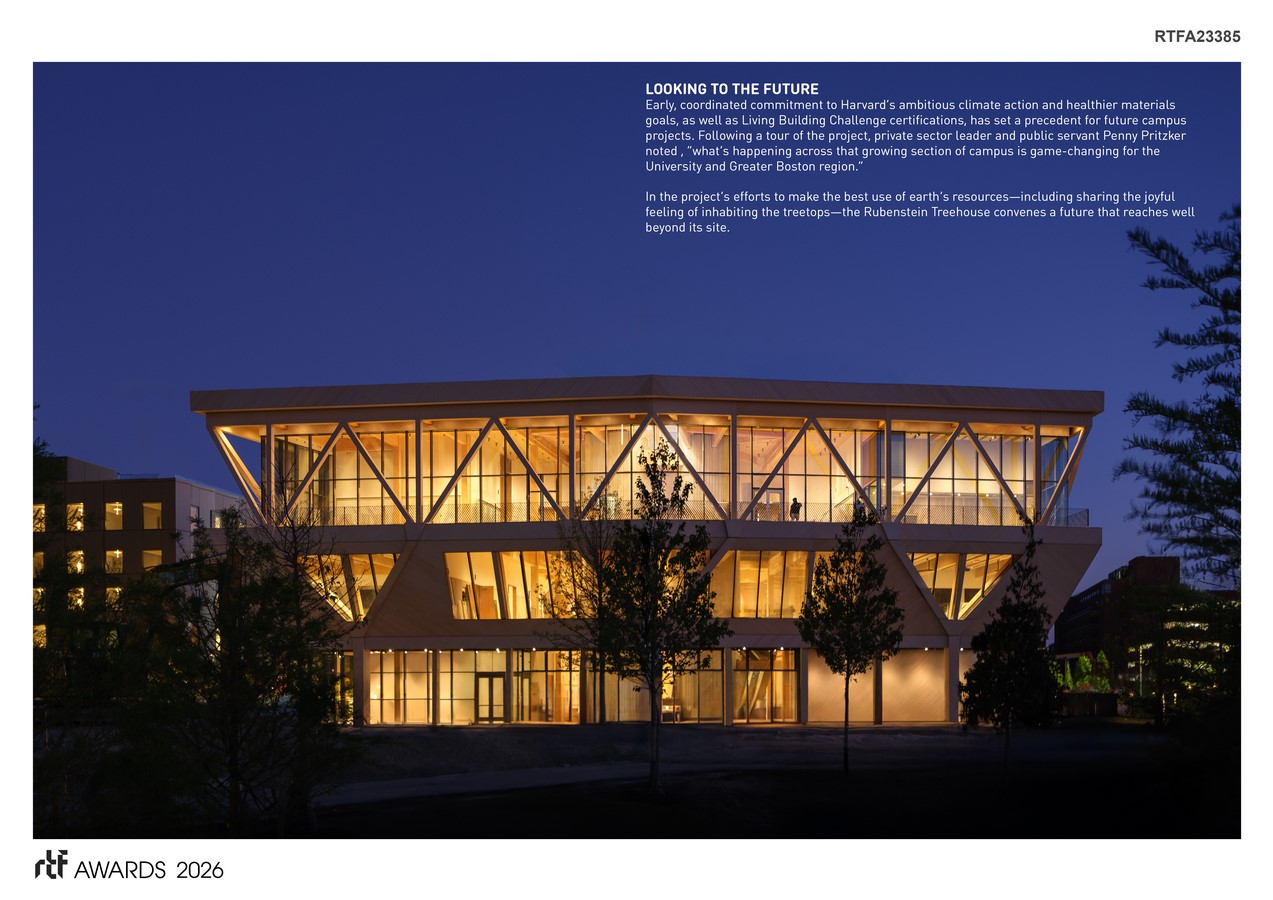
A biodiverse landscape creates a vibrant year-round environment, offers attractive habitat for wildlife, and features bioswales that work in combination with a rooftop collection system to retain and reuse rainwater. In addition to achieving Harvard’s Healthier Building Academy goals, the David Rubenstein Treehouse is targeting Living Building Challenge (LBC) Core Certification and LBC Materials Petal Certification.


