


This project is a compact, all-electric, landscape-sensitive building that is both Zero Energy Ready under the Living Building Challenge framework and proven in real time as a community resilience hub. It weaves passive design, net‑zero energy performance, and climate-adaptive operation into a single, right‑sized intervention on a largely undisturbed 9‑acre site.
Rethinking The Future Awards 2026
First Award | Architectural Innovation (Built)
Project Name: Box Factory
Category: Architectural Innovation (Built)
Studio Name: hb+a Architects
Design Team: hb+a Architects
Area: 1750 SF
Year: 2019
Location: California
Consultants: SDE Engineering (Structural Slab)
Photography Credits: Doug Birnbaum, Branded Content Media
Render Credits: –
Other Credits: Box Lab Project Owner

Zero Energy Ready performance
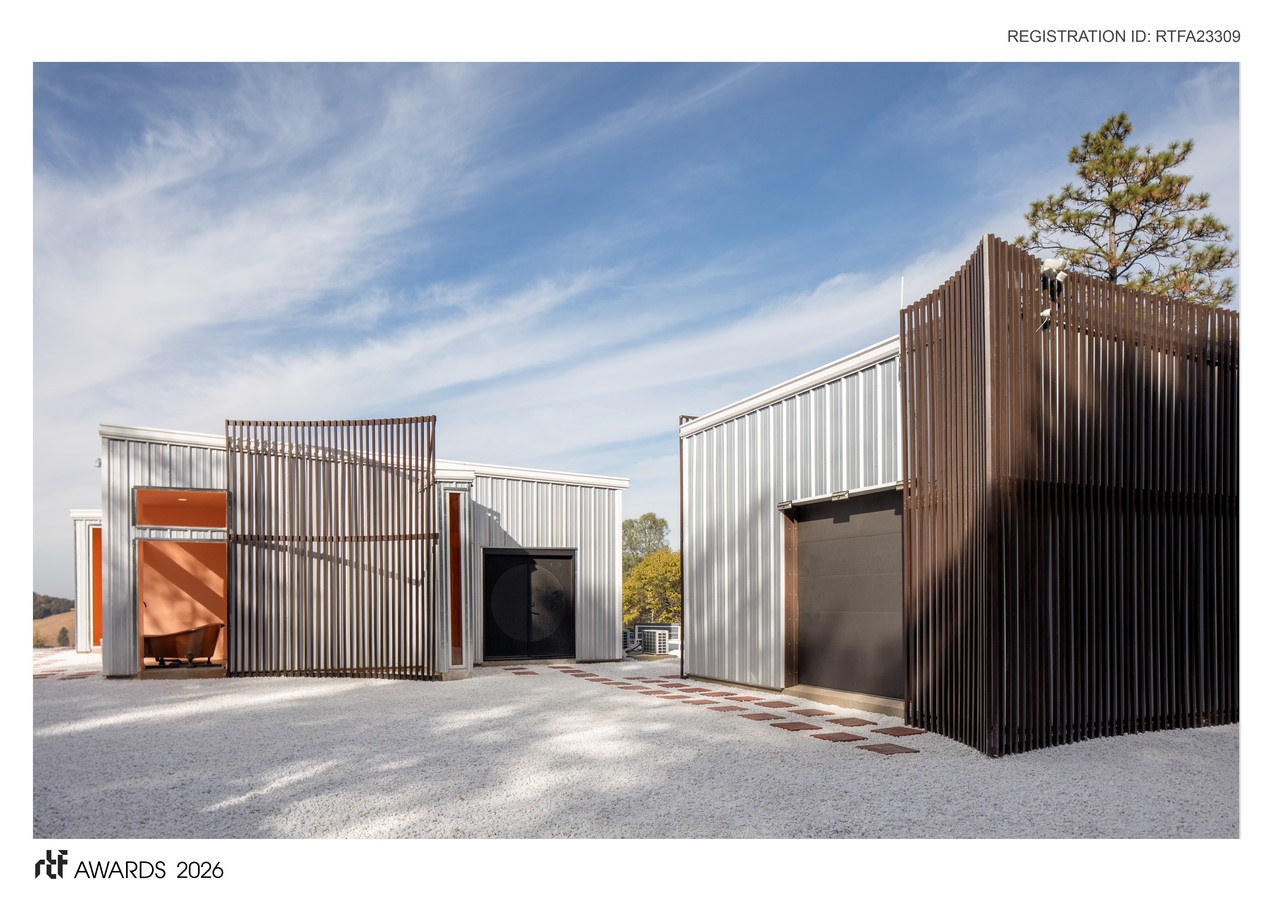
As an all‑electric building powered entirely by onsite solar, it eliminates fossil fuel use. The envelope, systems, and controls are designed so that the PV array can reliably meet the building’s annual energy needs.
Passive design and Siting
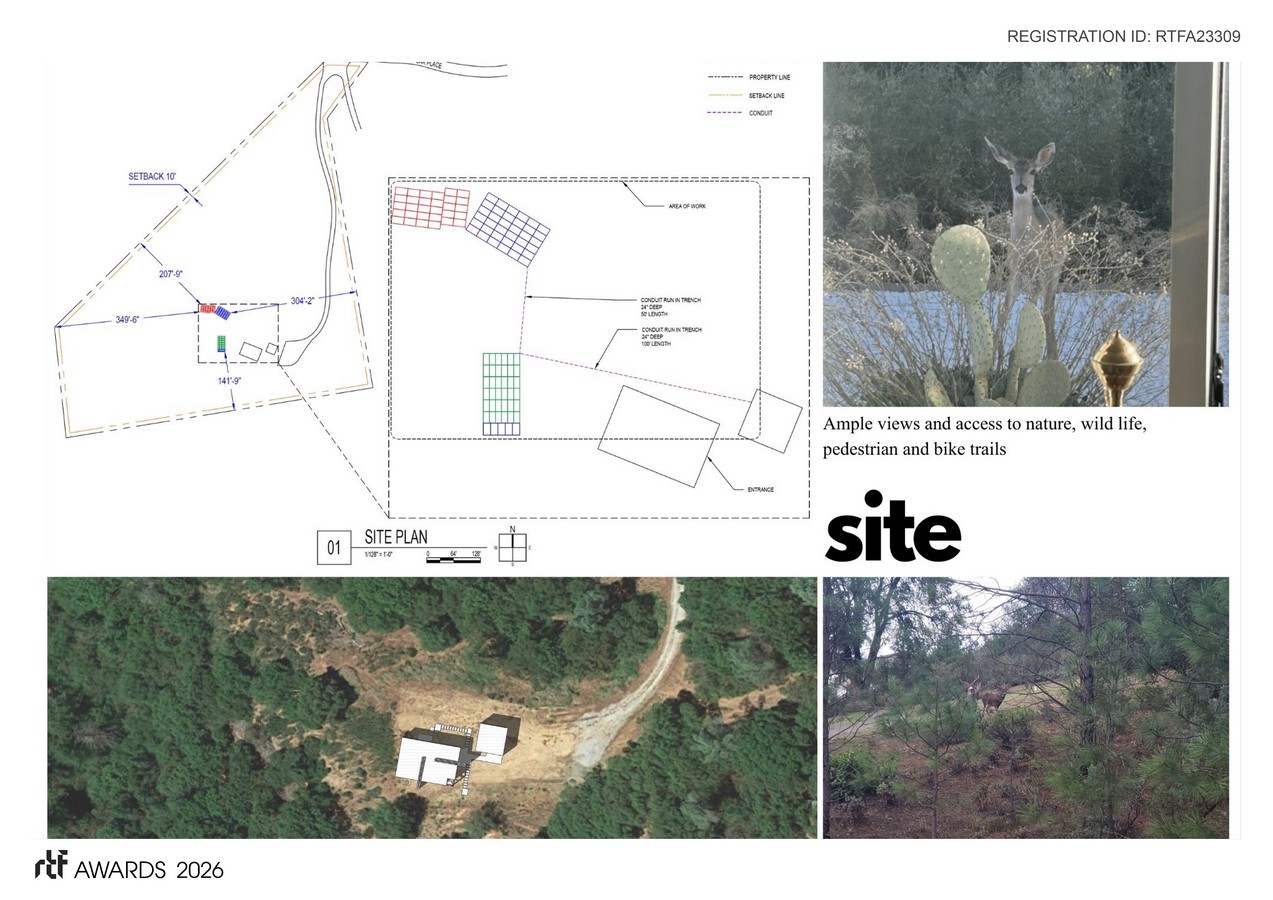
The building treats climate as a primary design partner. The building is carefully oriented to respond to prevailing wind patterns, solar path, and existing site features, including trees and a creek that remain untouched. North-facing windows open to the lush landscape, drawing in diffuse daylight and views. Building orientation and glazing placement work together to maximize natural daylight. Operable windows, ceiling fans, and alignment with local wind patterns support effective cross‑ventilation and passive cooling further reducing energy use.
Light touch on the land
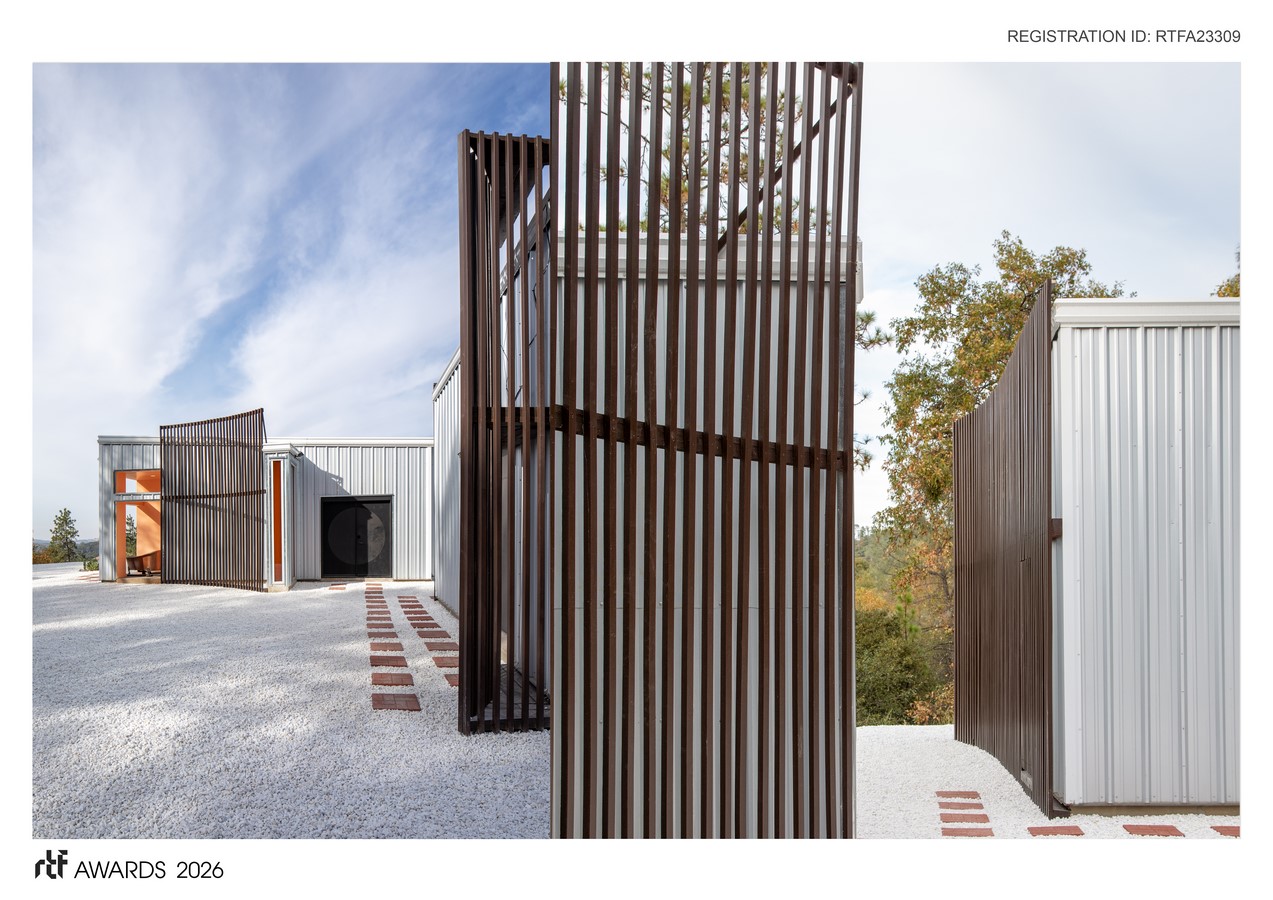
The project adopts a “do no harm” approach to the site. By reusing the existing pad, it avoids new grading, preserving the ecological integrity of the property. The building’s modest 1,750‑square‑foot footprint reflects a deliberate right‑sizing strategy. This compact, carefully placed building allows most of the site to remain in its natural condition, maintaining habitat and hydrology and reinforcing the project’s role as restorative.
Proven resilience during the Electra Fire
The project’s resilience was tested during the 2022 Electra Fire, which ignited near Electra Road and Highway 49 and quickly spread across 4,478 acres in Amador and Calaveras counties, triggering evacuations and grid shutoffs. During this period, the building maintained continuous operation without loss of power, validating its design as a functional resilience hub in an active climate emergency. The building also offered an atmosphere of calm and refuge, demonstrating that equitable access, inclusion, and resilience are not abstract goals but lived realities in crisis.
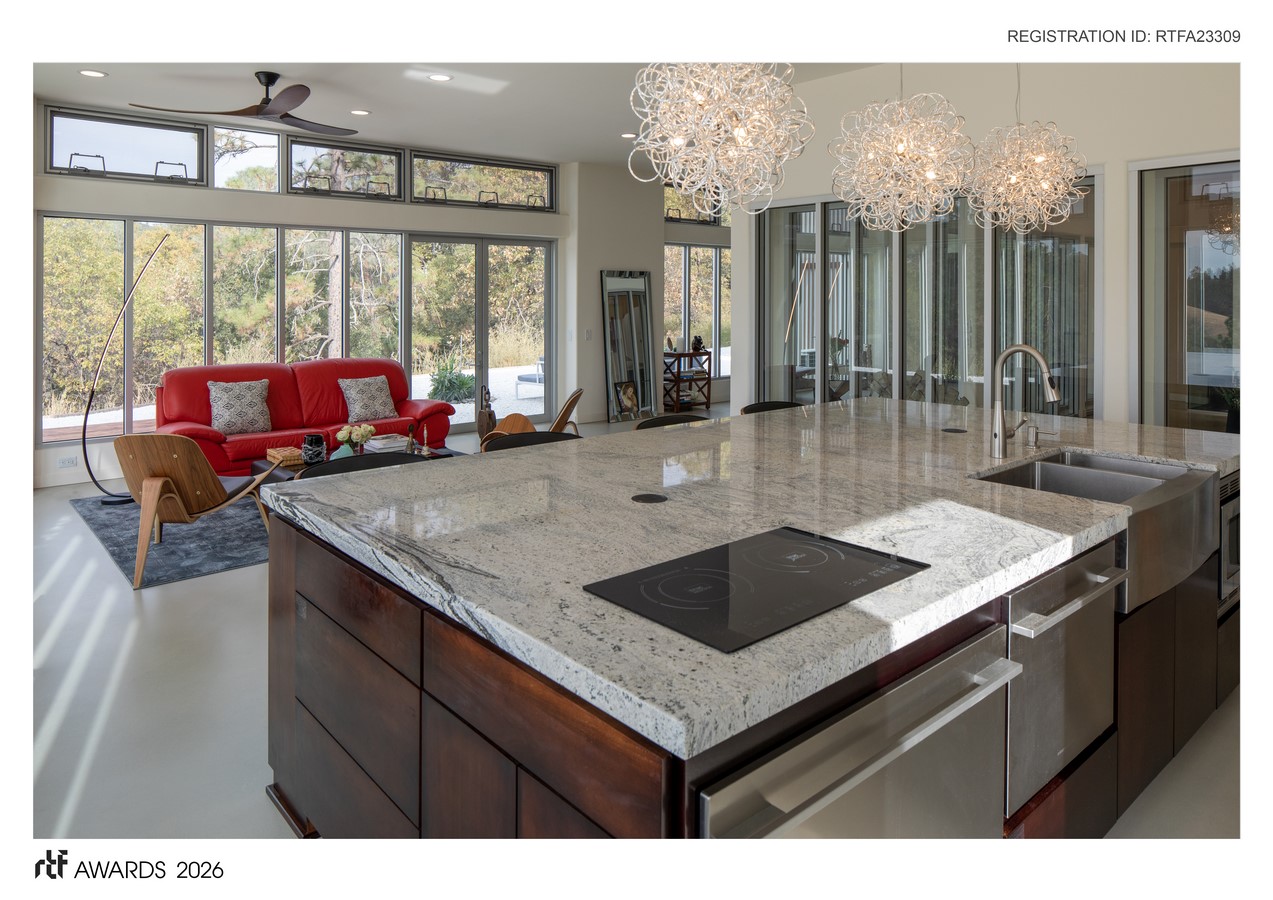
Climate adaptation and durability
The Box Factory is intentionally designed to endure and perform in a rapidly changing climate. Its small footprint reduces both operational loads and the area of land exposed to disturbance, while its form and orientation enable passive cooling. Drought-tolerant landscaping paired with on-site stormwater strategies supports water conservation and infiltration. The high-performance envelope and mechanical systems protect indoor air quality and thermal comfort.
AIA Design Excellence and right-sized sustainability
Aligned with AIA Design Excellence principles, the project is conceived as a restorative, nature-connected environment that advances health, wellness, and community resilience. Its orientation is not only a technical response but a way of reconnecting occupants with daily and seasonal environmental rhythms.
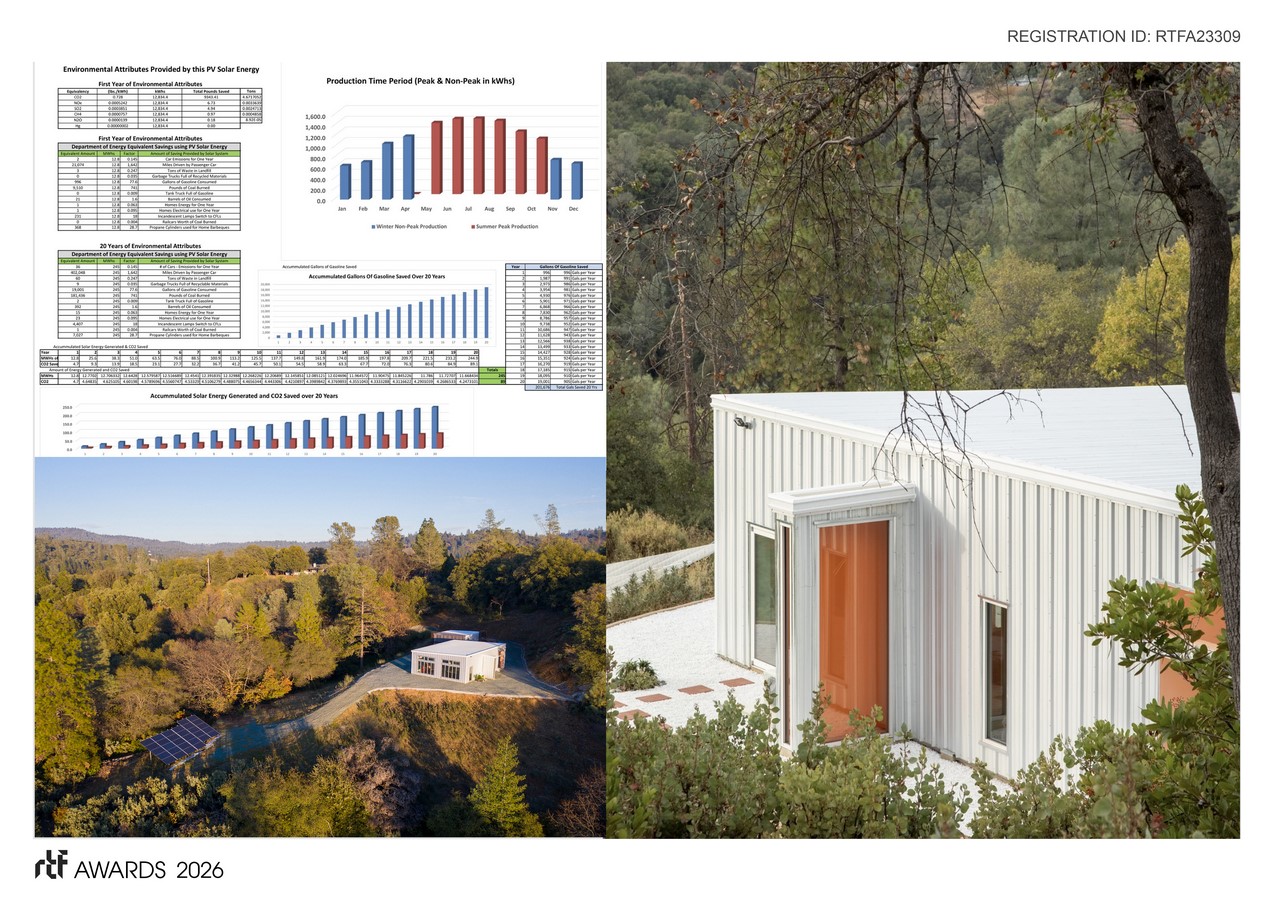
Sustainability is expressed in every design decision from massing and material choice to window placement. The building embodies a right‑sized philosophy; it uses only the space and resources necessary, reducing waste, embodied carbon, and energy demand without overbuilding. Box Factory works with its environment instead of against it, offering a quietly radical model for resilient, low-impact architecture.


